Sashimi is one of Japan’s best-known foods, but it is often misunderstood as simply “raw fish.” In Japanese cuisine, sashimi is a prepared dish in which carefully selected seafood or another ingredient is sliced and served without vinegared rice. The quality of the ingredient matters, but so do the cut, temperature, arrangement, and accompaniments.
This guide explains what sashimi is, how it differs from sushi, the types commonly served in Japan, and how to enjoy it with confidence.
What Defines Sashimi?
Sashimi generally refers to slices of raw seafood served on their own rather than over rice. Fish is the most familiar form, although squid, octopus, shellfish, and certain non-seafood ingredients may also be presented as sashimi.
The word is written 刺身. Its historical origin has more than one explanation, so literal translations such as “pierced body” do not fully explain the modern dish. For diners, the useful definition is simple: sashimi highlights the ingredient itself through selection, handling, cutting, and presentation.
Raw food is not automatically sashimi. A restaurant prepares each ingredient for a particular texture and eating experience. Some items are served raw, while others may be lightly blanched, cured, seared, or otherwise treated before serving.
Is Sashimi the Same as Sushi?
No. The defining element of sushi is seasoned vinegared rice. Sashimi is served without sushi rice.
- Sushi: vinegared rice combined with toppings, fillings, or other ingredients
- Sashimi: sliced seafood or another prepared ingredient served without vinegared rice
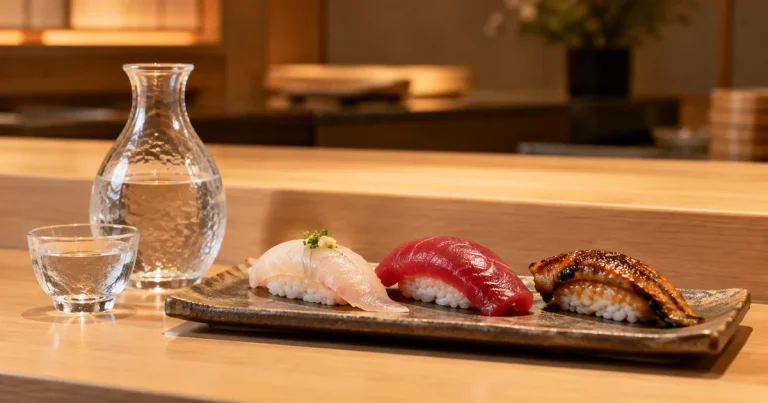
A slice of tuna served alone is sashimi. The same type of tuna placed over vinegared rice is nigiri sushi. For a fuller comparison, see Sushi vs. Sashimi. If you are new to the wider category, begin with What Is Sushi?.
Popular Types of Sashimi in Japan
Availability changes with the season, region, and restaurant. Common examples include:
- Maguro: tuna, ranging from lean akami to fattier cuts
- Tai: sea bream, valued for its clean flavor and firm texture
- Buri or hamachi: yellowtail, with names and character that vary by age and season
- Sake: salmon, known for a rich taste and soft texture
- Katsuo: bonito, sometimes lightly seared as tataki
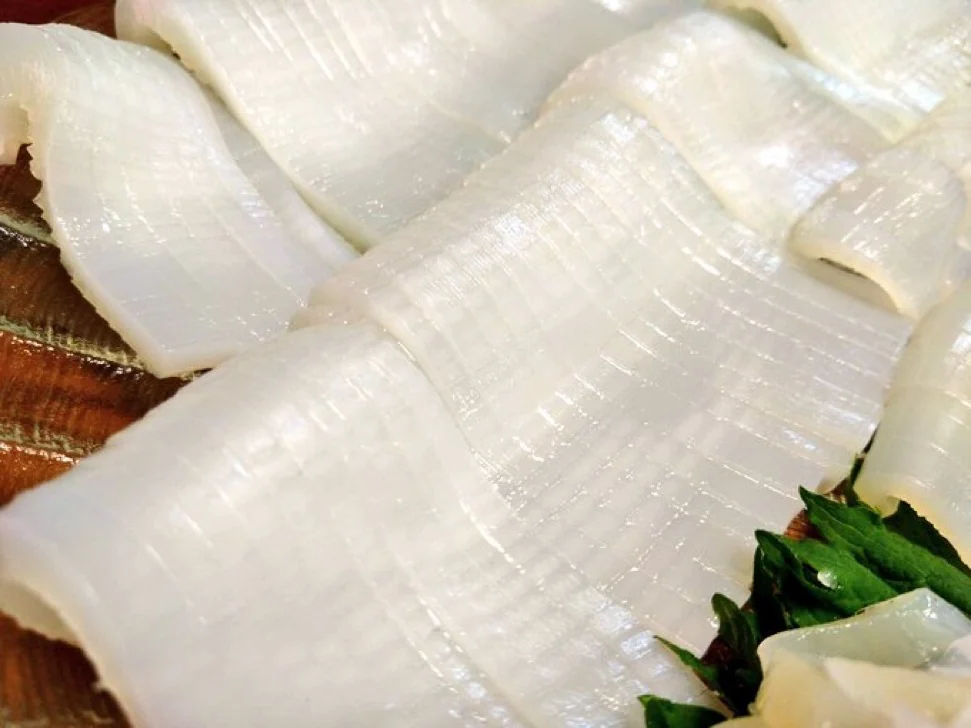
- Ika: squid, which may be cut to make its texture easier to enjoy
- Hotate: scallop, appreciated for its sweetness
- Amaebi: sweet shrimp, usually served raw and chilled
Regional dishes can expand the idea further. Some places serve local fish, shellfish, yuba, konnyaku, or meat in sashimi-style preparations. The menu and local custom determine what the term means in context.
How Sashimi Is Prepared
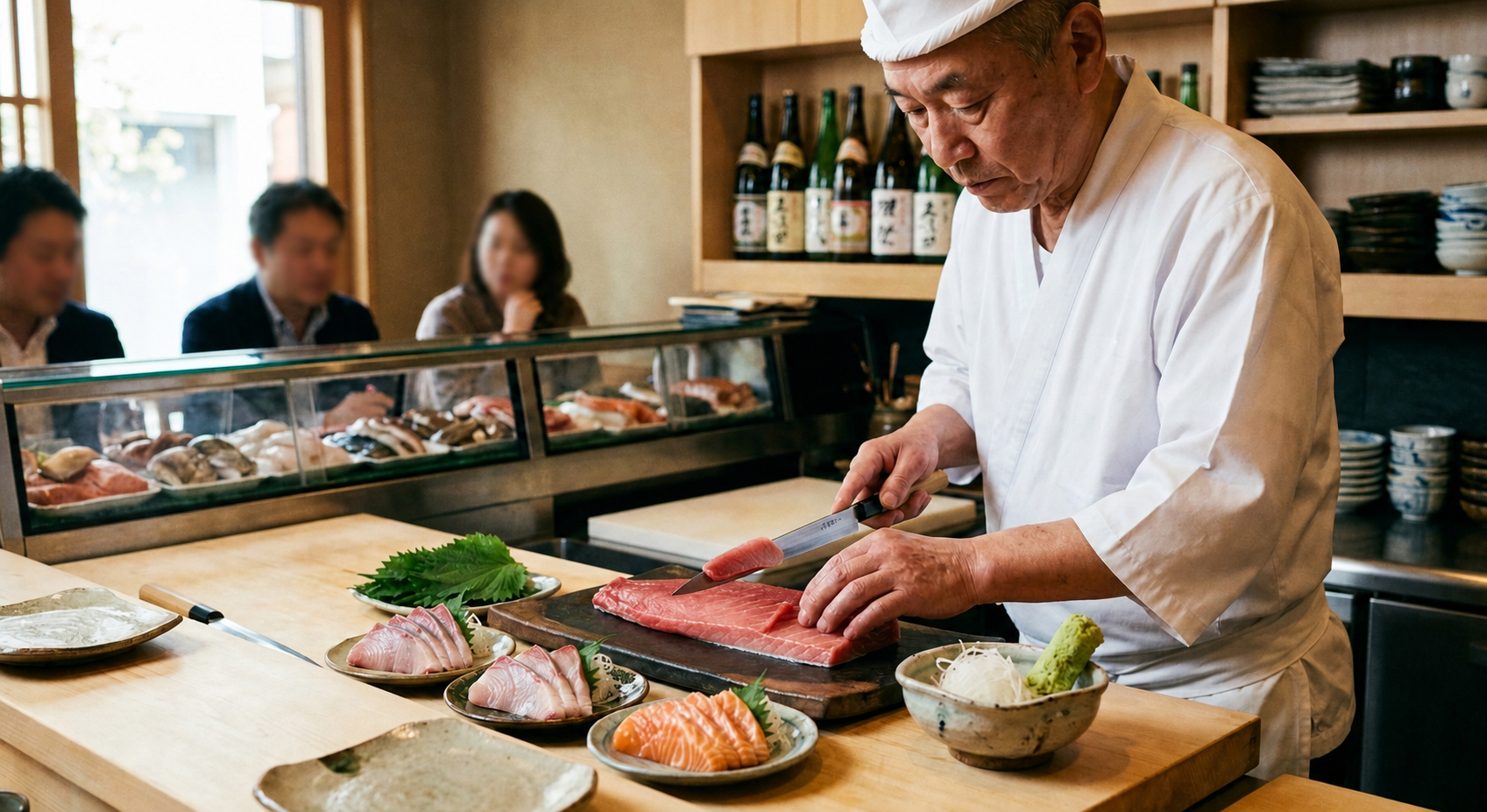
Good sashimi begins before the knife touches the ingredient. Chefs assess freshness, fat, firmness, connective tissue, and the direction of the grain. They may rest, chill, salt, cure, or lightly sear an ingredient to improve its flavor and texture.
Cutting Changes the Texture
The thickness and direction of a cut affect how sashimi feels in the mouth. A firm white fish may be sliced thinly, while a soft or fatty fish may suit a thicker cut. Squid can be scored with fine knife marks to change its texture and help seasonings cling to the surface.
Some Sashimi Is Cured or Seared
Sashimi does not always mean completely untreated seafood. For example, fish can be lightly cured with salt, marinated, or pressed between sheets of kombu. In Toyama’s kobujime tradition, sashimi is layered with kombu, which contributes umami as the fish rests. Other preparations may briefly sear the surface while leaving the center rare.
What I Look For When Slicing Sashimi
When I prepare sashimi, I do not begin with a fixed thickness for every fish. I first look at the direction of the muscle fibers, the amount and distribution of fat, and whether the flesh is firm, soft, or slightly elastic. A lean, firm fish may benefit from a different angle or thickness than fatty tuna or a tender scallop.
The knife should pass through cleanly rather than sawing back and forth. A rough cut can damage the surface, release moisture, and change the texture before the sashimi reaches the diner. Decorative cuts are useful only when they improve tenderness, help seasoning adhere, or suit the character of the ingredient.
Temperature and timing matter as much as appearance. Seafood must remain under proper food-safety controls, but serving it at the correct moment also affects aroma and mouthfeel. This is one reason sashimi should be treated as a prepared dish—not simply raw fish placed on a plate.
What Is Served with Sashimi?
Sashimi is often arranged with shredded daikon radish, shiso leaves, and edible garnishes. Soy sauce is common, while wasabi, grated ginger, citrus, salt, or ponzu may be offered depending on the ingredient.
Wasabi should support the food rather than cover it. Fresh wasabi has a more aromatic and less blunt character than many prepared green pastes. Learn more in What Is Wasabi?.
How to Eat Sashimi in Japan
- Use chopsticks to pick up one piece.
- Add only a small amount of wasabi if it has not already been seasoned.
- Dip an edge lightly in soy sauce rather than soaking the entire slice.
- Eat the piece in one bite when its size allows.
- Try milder items before richer or strongly flavored ones when a platter offers several varieties.
There is no need to mix a large mound of wasabi into the soy sauce. At a chef-led restaurant, a piece may already have the intended seasoning, so tasting it first is a good approach.
Can You Safely Make Sashimi at Home?
Seafood that looks fresh is not automatically suitable for raw consumption. Parasites, bacteria, handling, and temperature control are separate concerns. Buy seafood specifically intended to be eaten raw from a trusted specialist and follow local food-safety guidance. If the seller cannot confirm that it is suitable for raw use, cook it.
Restaurant sashimi also depends on professional storage, trimming, sanitation, and preparation. The term “sashimi-grade” may be used commercially, but shoppers should still ask the seller what the label means and how the product was handled.
Where Sashimi Appears in a Japanese Meal
Sashimi may be ordered as a separate dish at an izakaya or seafood restaurant. It can also appear as one course in a formal meal, where it may be called mukozuke or otsukuri depending on the style and setting.
In a multi-course dinner, the sashimi course contributes an uncooked or minimally treated expression of the season. This contrasts with grilled, simmered, steamed, and fried courses. That balance of techniques is one reason sashimi has an important place in kaiseki cuisine.
Common Questions About Sashimi
Does sashimi always mean raw fish?
No. Seafood is most common, but other ingredients may be served as sashimi. Some seafood preparations are lightly seared, cured, blanched, or otherwise treated rather than completely raw.
Does sashimi come with rice?
Sashimi itself is served without vinegared rice. Plain rice may be ordered or served elsewhere in the meal, but adding sushi rice changes the dish into a form of sushi.
What is the white shredded garnish under sashimi?
It is usually finely shredded daikon radish called tsuma. It adds freshness and texture and is edible.
What to Remember About Sashimi
Sashimi is a prepared Japanese dish that places the ingredient at the center of the experience. It differs from sushi because it contains no vinegared rice, and its quality depends on far more than rawness alone. Selection, handling, knife work, temperature, seasoning, and presentation all shape the final result.
Understanding those details makes a sashimi plate easier to appreciate—and helps explain why a seemingly simple dish can reveal so much skill.
If this article deepened your understanding of Japanese food culture, you can support Japan Food Compass on Ko-fi and help us continue sharing carefully researched guides and original kitchen stories.