Japanese sweet potato dishes extend far beyond a hot roasted potato. In Japan, satsumaimo can be cooked with rice, added to a savory soup or simmered dish, glazed for a snack, shaped into wagashi, dried for later eating, or adapted into regional specialties. The same root can sit beside the main course or become the sweet finish.
That range may surprise visitors who associate sweet potatoes mainly with orange-fleshed holiday casseroles, fries, or pie. Japanese cooking does not treat sweetness as a reason to keep the ingredient out of savory food. Instead, cooks use it as a contrast to salt, soy sauce, dashi, meat, sesame, and plain rice.
Satsumaimo Does Not Mean One Flavor or Texture
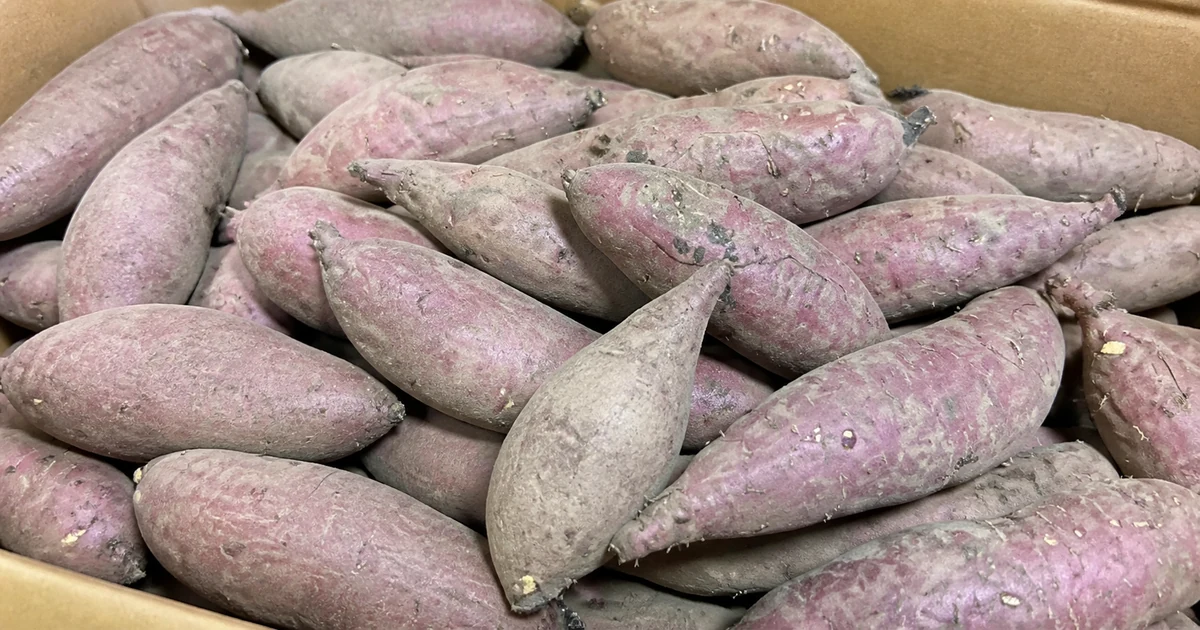
Satsumaimo (さつまいも) is the everyday Japanese name for sweet potato. Many familiar market varieties have reddish-purple skin and pale yellow flesh, but that appearance is not universal. Purple-fleshed, orange-fleshed, white, and other types are also grown for eating, processing, starch, and shochu.
Texture changes with the variety and the cooking method. Beniazuma is associated with a relatively floury, fluffy bite, while Beniharuka represents the sweeter, moister end of the range. Anno imo from Tanegashima is known for becoming smooth and sweet when cooked. These differences matter: a potato that collapses softly into rice does not produce the same experience as one chosen to hold a clean shape.
There is also a language trap. In an English conversation, “sweet potato” usually names the root itself. In Japan, the loan phrase sweet potato can also refer to a Western-influenced baked confection made from seasoned sweet potato paste. Saying satsumaimo makes the ingredient clear.
Sweet Potato Rice Makes the Root Part of the Meal
Satsumaimo gohan is rice cooked with pieces of sweet potato. The ingredient is not merely placed on top after cooking. As the rice steams, the potato softens and its gentle sweetness becomes part of the pot. Salt may sharpen that sweetness, while black sesame can add color and a nutty accent.
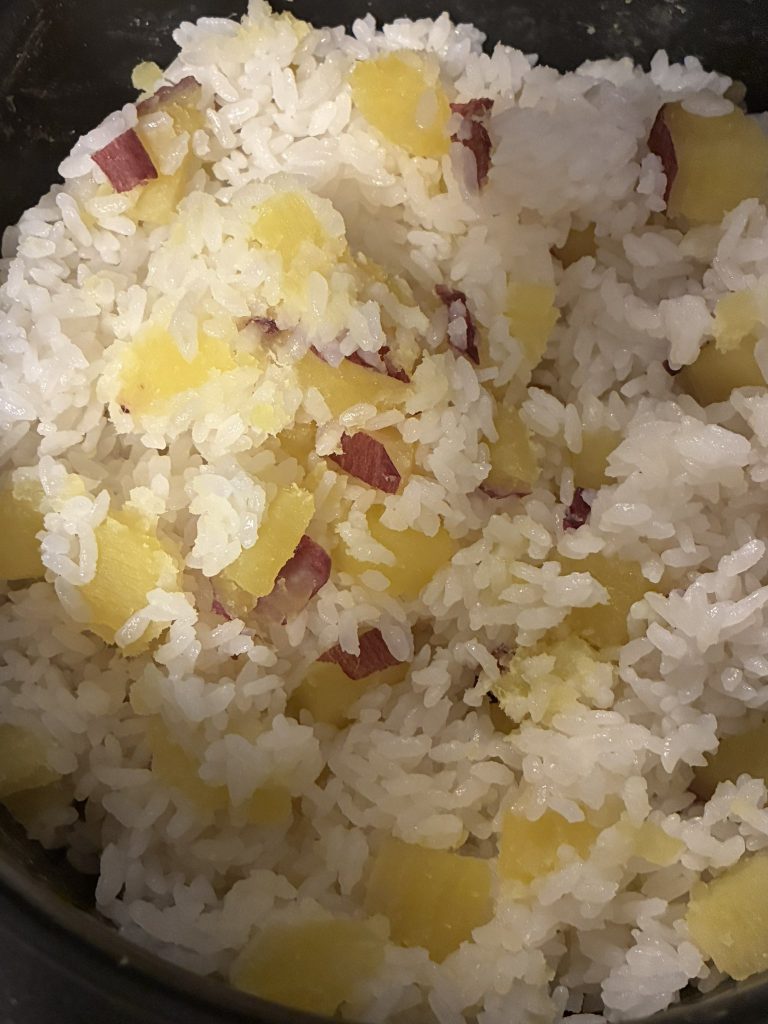
The balance is different from a heavily seasoned mixed rice. A simple version allows the flavor of the rice and potato to remain distinct in the same mouthful. Our guide to Japanese rice explains why its short grains and cohesive texture work so well as the base.
In Kagoshima, a regional version is called karaimo gohan. Karaimo is a local name for sweet potato, and the Ministry of Agriculture, Forestry and Fisheries describes the dish as cubed sweet potato cooked with rice, especially during the autumn harvest. That regional name adds history, but sweet potato rice is not confined to one prefecture or one fixed household recipe.
A Savory Pot Can Use Sweetness as Contrast
Sweet potato also works in brothy and simmered dishes. Its edges absorb some of the surrounding liquid while the center keeps its own sweetness. With beef, the result can balance rich meat, a savory broth, and a soft root vegetable without becoming a dessert.
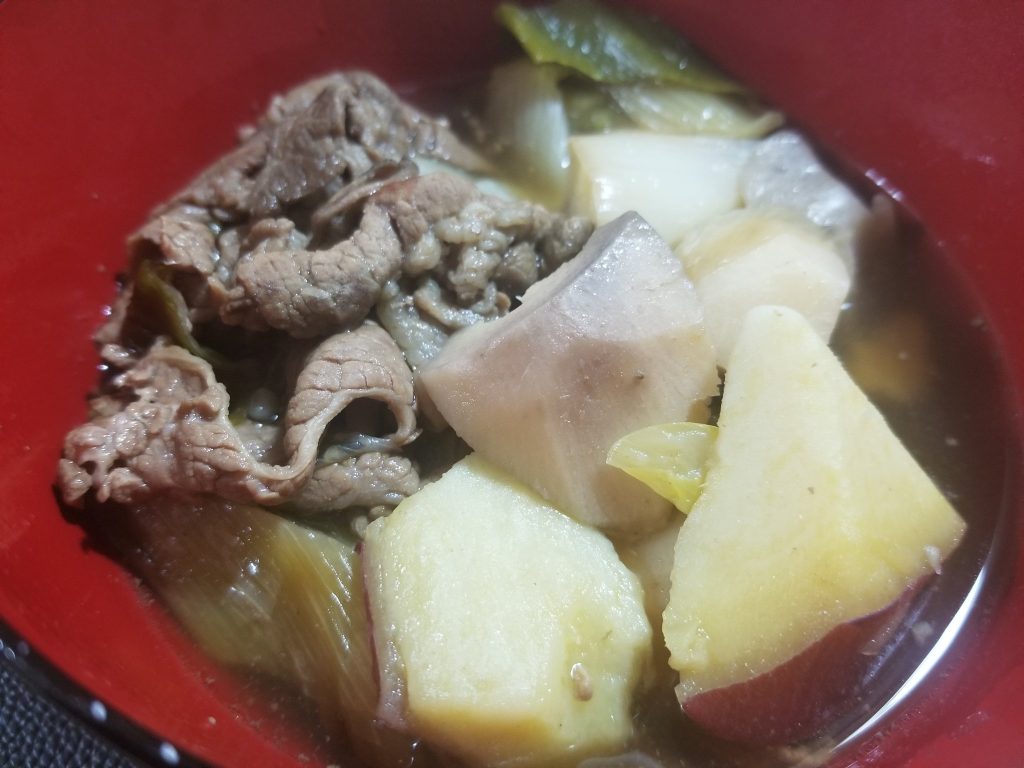
The photographed dish has no formal name. It is closest in spirit to imoni because meat and tubers are simmered together, but calling it standard imoni would be misleading. Well-known imoni traditions commonly center on satoimo, or taro, and their meat and seasoning vary by region. This version uses sweet potato and beef, and it is not miso-based.
That distinction shows how home cooking often works. A meal can draw on a familiar format without becoming an official regional dish. Sweet potato may also appear in miso soup, pork soup, or other simmered preparations, but those are separate possibilities rather than names for the bowl shown here. Readers interested in the seasoning itself can use our guide to Japanese miso.
Daigaku Imo Turns It Into a Glossy Snack
For daigaku imo, pieces of sweet potato are fried and coated in a sweet glaze, often with black sesame. The surface becomes glossy and concentrated, while the inside remains soft. Some versions have a light syrup; others develop a firmer, almost candied coating. Cuts and recipes vary, so wedges, irregular chunks, and round slices can all produce recognizably different results.
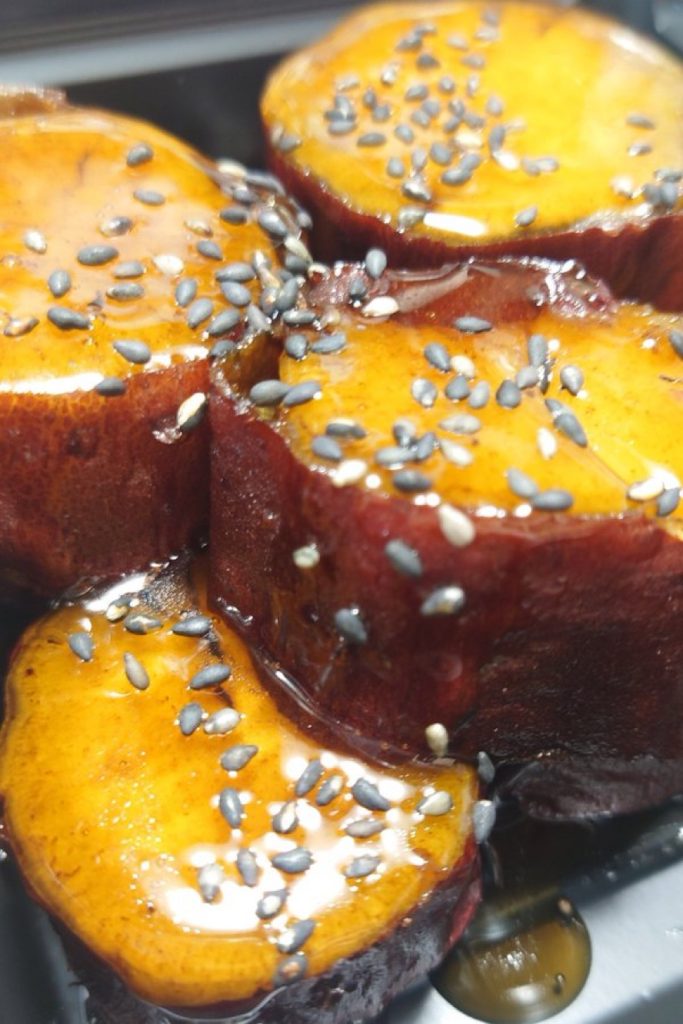
Other sweets emphasize the potato in quieter ways. Imo yokan is a dense, sliceable sweet made primarily from sweet potato rather than the red bean paste many visitors associate with yokan. Roasted yakiimo may need no added sugar at all. The Japanese confection called sweet potato usually enriches mashed potato with ingredients such as butter, milk or cream, sugar, and egg before baking. These foods share an ingredient, not one texture or technique.
Regional Foods Show Different Local Priorities
Sweet potatoes became especially important in places where climate, soil, and limited rice production encouraged people to make more of a hardy crop. That history survives in dishes that are now snacks, souvenirs, festival foods, and everyday favorites.
| Place | Food | How sweet potato is used |
|---|---|---|
| Kagoshima | Karaimo gohan | Cooked with rice for a simple seasonal meal |
| Kagoshima and southern Kyushu | Gane | Cut into strips with vegetables, battered, and fried |
| Goto Islands, Nagasaki | Kankoro mochi | Dried sweet potato is combined with glutinous rice |
| Ibaraki | Hoshiimo | Steamed sweet potato is sliced and dried for preservation |
| Aichi | Oni manju | Sweet potato pieces are held in a simple wheat-flour dough |
The list is a set of examples, not a complete map. Even the same name can cover household variations. In western Miyazaki, for example, sweet potatoes may be called karaimo, and sweets mixing sweet potato with mochi have names including nettabo and nerikuri. Regional vocabulary can therefore reveal as much as the recipe.
What Travelers Can Look For
There is no single “sweet potato restaurant” experience that represents Japan. Autumn markets and prepared-food counters may offer sweet potato rice or glazed snacks. Wagashi shops can carry imo yokan, while station shops and regional souvenir stores may sell dried potatoes, cakes, or mochi connected to local production. Yakiimo appears in specialist shops, supermarkets, and seasonal sales.
Availability changes with the season, prefecture, and business. A local specialty listed in a guide is not guaranteed at every restaurant nearby. It is better to notice the Japanese name, ask what form the potato takes, and compare texture: fluffy, moist, sticky, dried, fried, or blended with rice.
This is part of the larger pleasure of regional Japanese food. Our introduction to washoku explains why season, place, and the treatment of ingredients matter more than a single national menu.
One Root, Many Roles
Japanese sweet potatoes can support a bowl of rice, soften into a savory dish with beef, take on a crisp glazed surface, or become a carefully shaped confection. Regional cooks have also dried, pounded, fried, and renamed the ingredient according to local conditions.
For a traveler, the useful question is not only “Where can I find yakiimo?” It is “What role is satsumaimo playing here?” The answer may be staple, vegetable, snack, sweet, preserved food, or a taste of one particular region.
Editorial Sources
- National Agriculture and Food Research Organization: Floury and Moist Sweet Potato Textures
- Ministry of Agriculture, Forestry and Fisheries: Tanegashima Annou Sweet Potato
- Ministry of Agriculture, Forestry and Fisheries: Karaimo Gohan
- Ministry of Agriculture, Forestry and Fisheries: Imoni
- Ministry of Agriculture, Forestry and Fisheries: Kagoshima Regional Cuisine
- Ministry of Agriculture, Forestry and Fisheries: Hoshiimo
- Ministry of Agriculture, Forestry and Fisheries: Oni-manju