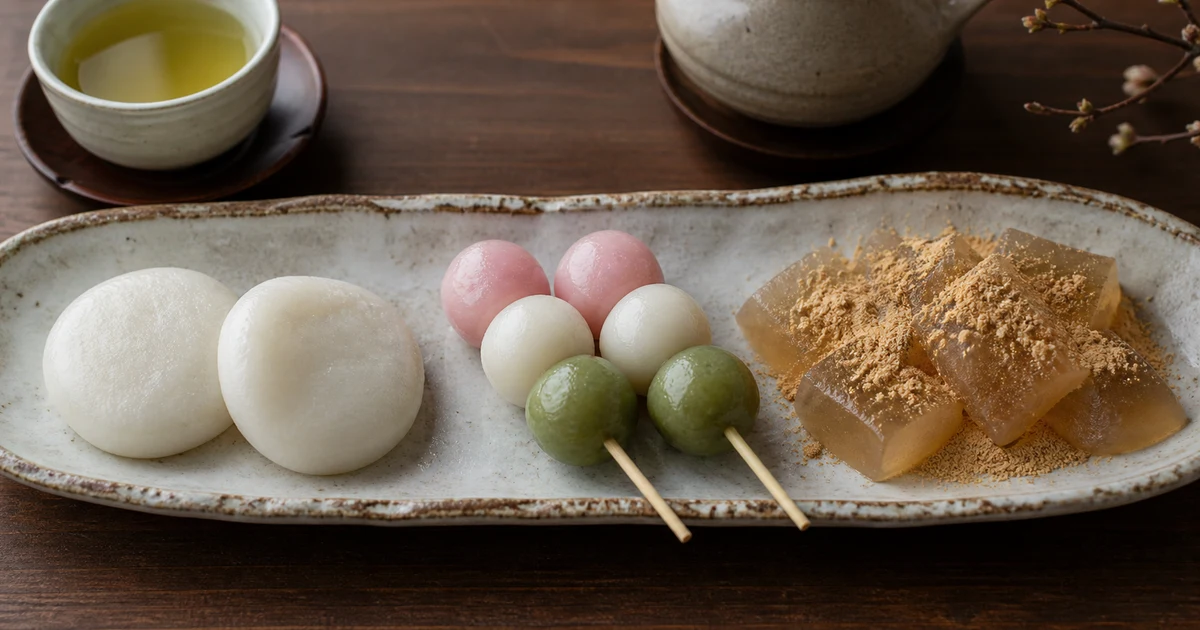
Mochi is traditionally made by pounding steamed glutinous rice, while dango is shaped from a rice-flour dough and warabi mochi is a soft starch-based sweet. Daifuku is a filled confection with a soft mochi or gyuhi exterior. Their names are often grouped together in English, but the ingredients, preparation, and ways they are served are not the same.
The easiest way to understand these Japanese sweets is to look past their shared chewiness. Some begin as whole rice grains, others as flour, and warabi mochi may contain no rice at all.
The Differences at a Glance
| Sweet | Typical base | Texture | Common presentation |
|---|---|---|---|
| Mochi | Steamed mochigome, or a glutinous-rice preparation | Dense, sticky, stretchy | Plain, grilled, in soup, or with sweet and savory toppings |
| Daifuku | Soft mochi or gyuhi around a filling | Tender and chewy | Round confection filled with anko, fruit, cream, or other fillings |
| Dango | Rice flour or a blend of rice flours | Springy and compact | Small dumplings, often skewered and coated or glazed |
| Warabi mochi | Traditionally warabi starch; other starches may be used | Soft, slippery, jelly-like | Cut pieces with kinako and sometimes kuromitsu |
Recipes vary by region, confectioner, season, and price. The table describes useful reference points rather than rules for every product carrying one of these names.
Mochi Begins With Sticky Rice
Classic mochi begins with mochigome, a glutinous variety of Japanese rice. The rice is soaked, steamed, and pounded until the separate grains become a smooth, cohesive mass. Traditional mochitsuki uses a large mortar and wooden mallets, particularly around the New Year, although machines now perform much of this work.
Fresh mochi can be soft and stretchy. Once shaped and cooled, it becomes firmer and may be grilled or simmered. It is not automatically a dessert. Mochi appears in New Year’s ozoni soup, wrapped in nori and dipped in soy sauce, or served with sweet anko, kinako, or zunda.
Daifuku Is a Filled Mochi Sweet
Daifuku refers to a soft round confection wrapped around a filling. Sweet azuki bean paste is classic, while strawberry, cream, and ice cream versions are widely sold. The wrapper is often made as gyuhi, a soft preparation based on glutinous rice flour, sugar, and water that stays tender longer than plain pounded mochi.
This distinction explains a common American usage. “Mochi ice cream” names a modern filled sweet, but the word mochi in Japan covers a much larger family that includes plain rice cakes and savory dishes.
Ohagi Keeps Some of the Rice Grains Visible
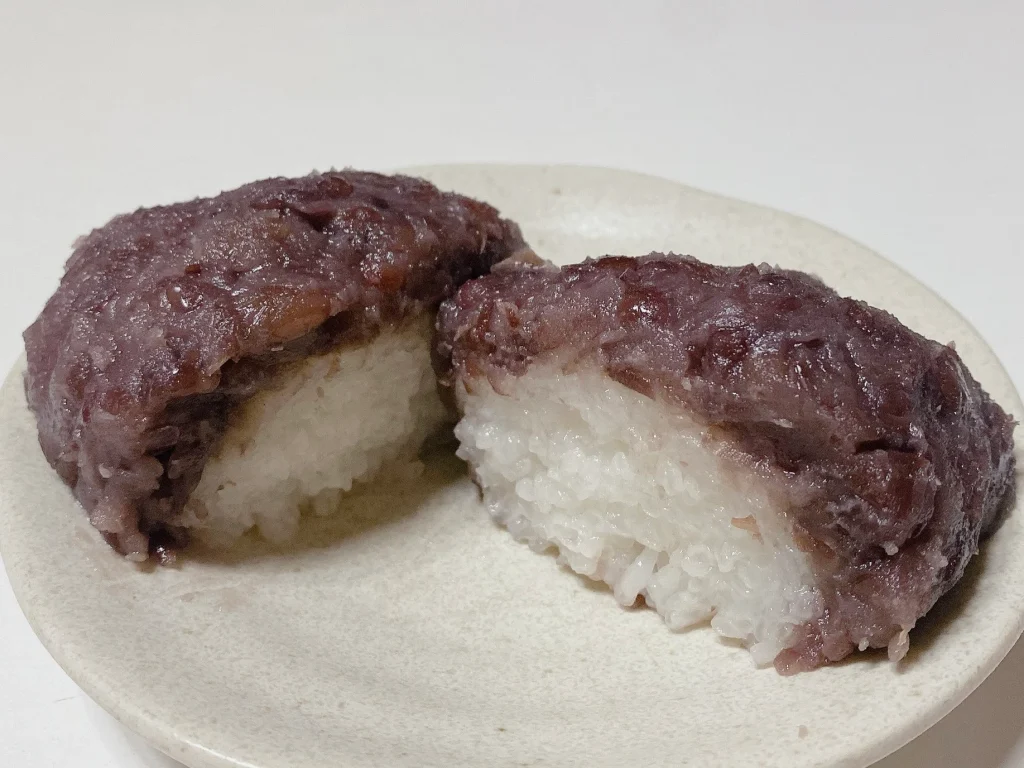
Ohagi is made from cooked or steamed glutinous rice that is lightly mashed rather than pounded completely smooth. The shaped rice is commonly covered with sweet azuki bean paste, although kinako and sesame versions also exist. It is closely associated with the spring and autumn equinoxes but is also eaten as an everyday sweet.
At the sushi restaurant represented in this photo, ohagi may appear as a seasonal dessert. Because the kitchen already pays close attention to rice, it cooks mochigome from the grain for the dessert instead of beginning with a ready-made mochi wrapper. This is a specific restaurant practice, not a rule for every sushi shop.
Dango Is Shaped From Rice-Flour Dough
Dango is usually made by mixing rice flour with water, shaping the dough into small balls, and cooking them by boiling, steaming, or grilling. The exact flour matters. Joshinko comes from ordinary non-glutinous rice, while shiratamako comes from glutinous rice and produces a softer result. Shops and households may blend flours to create their preferred firmness.
Skewers are common but not mandatory. Mitarashi dango is coated with a glossy sweet-savory soy glaze. Hanami dango uses pink, white, and green dumplings associated with the spring blossom season. Shiratama are small white rice-flour dumplings commonly served in sweet soup or with fruit and ice cream.
Compared with fresh mochi, dango generally feels more compact and springy. It is portioned before cooking rather than pounded from a single mass of steamed rice.
Warabi Mochi Is a Starch Sweet, Not Rice Mochi
Traditional warabi mochi is made by cooking bracken-root starch, water, and sugar until the mixture thickens and becomes translucent. After cooling, it is cut and commonly served with kinako, the roasted soybean flour that provides a dry, nutty contrast. Kuromitsu syrup may be added for deeper sweetness.
Pure warabi starch is scarce and expensive. Japan’s Ministry of Agriculture notes that widely sold versions may use starches from sweet potatoes or other plants. JNTO also identifies tapioca and kudzu powder as commercial alternatives. Reading the ingredient list is therefore more informative than judging authenticity by transparency alone.
A Matcha Version Served After Omakase Sushi
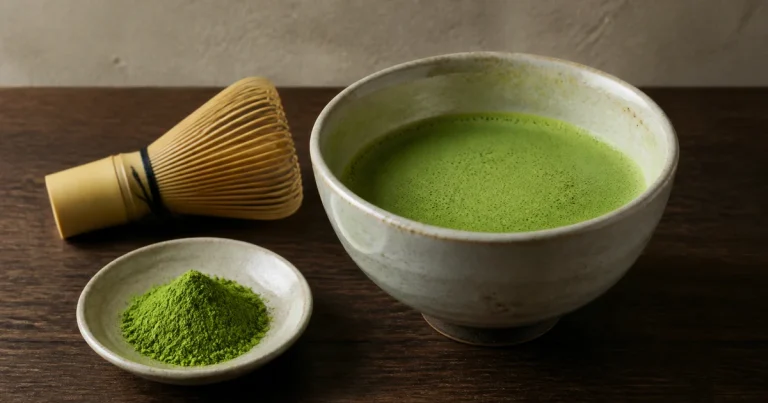
In the restaurant preparation shown here, matcha flavors the warabi-mochi-style dessert, while added kudzu starch strengthens its elasticity and visible stretch. It is served after an omakase sushi course as a cool, lightly bitter finish. The matcha contributes tea flavor and color; the starch and cooking method create the gel structure.
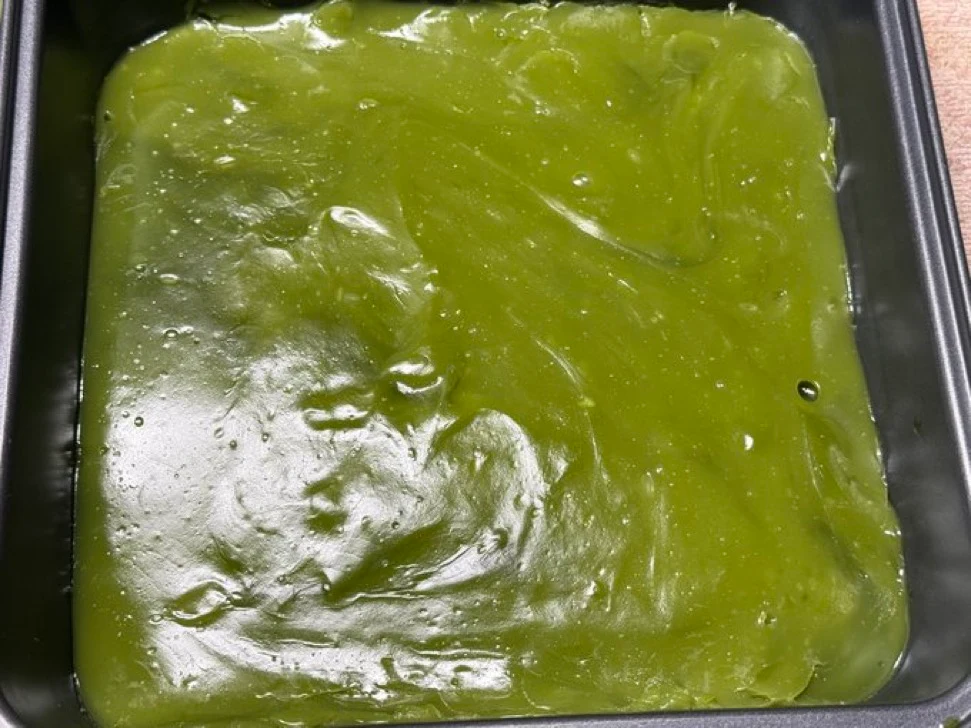
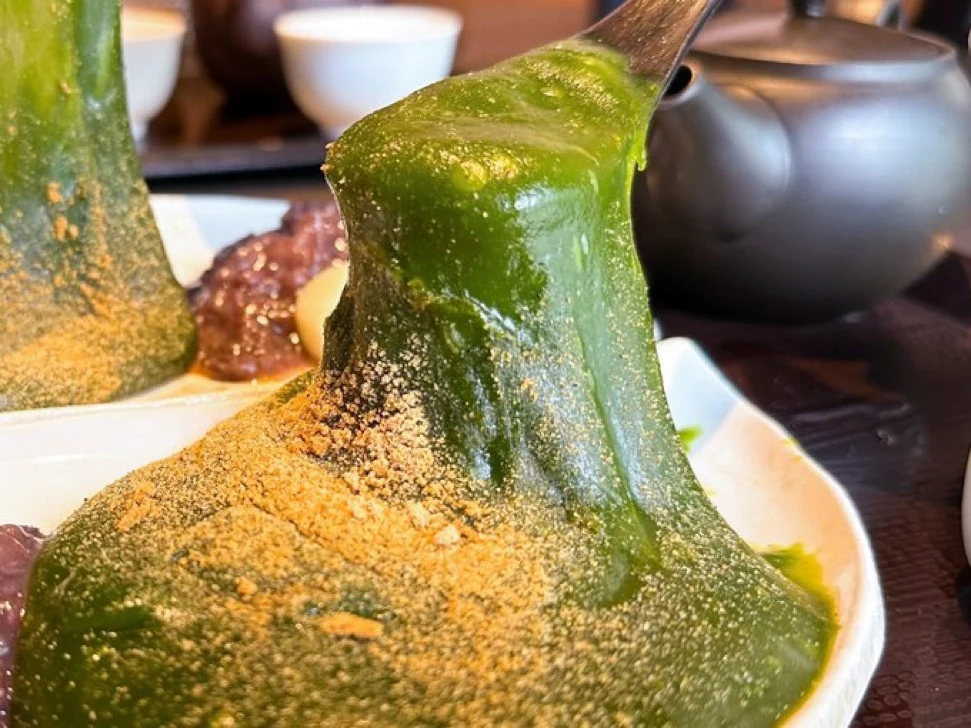
This is a restaurant-specific preparation rather than a universal formula. Another warabi mochi may be paler, softer, darker, or made with a different starch blend.
Why “Mochi” Does Not Always Mean Pounded Rice
Japanese food names sometimes use mochi because a food resembles mochi in shape or texture. Warabi mochi is the clearest example. Kudzu mochi is made from kudzu starch, while Hokkaido-style imomochi is made from potatoes and starch. Regional recipes add grains, mugwort, chestnuts, or other ingredients to rice mochi.
Ask what a product is made from when ingredients matter. The word alone does not confirm that a sweet contains rice, and rice-based sweets may still include soy, dairy, egg, sesame, or wheat through fillings, sauces, coatings, and shared equipment.
How to Choose at a Japanese Sweet Shop
- Choose plain or grilled mochi for a dense rice flavor and substantial chew.
- Choose daifuku when you want a soft wrapper and a distinct filling.
- Choose dango for compact dumplings with glaze, bean paste, or seasonal colors.
- Choose warabi mochi for a cooler, lighter, jelly-like texture with kinako or syrup.
Warabi mochi is especially associated with warm-weather refreshment, while grilled mochi and ozoni feel at home in winter. Daifuku and dango appear throughout the year, with fillings, colors, and shapes changing by season.
Eat Sticky Mochi Carefully
Dense rice mochi can be difficult to chew and swallow, particularly for young children, older adults, and anyone with swallowing difficulty. Japan’s Consumer Affairs Agency advises cutting mochi into small pieces, taking manageable bites, and chewing thoroughly before swallowing. A drink should not be used to force down poorly chewed mochi.
Texture differs among products, so do not assume that every item called mochi presents exactly the same risk. Still, unfamiliar chewy sweets should be eaten slowly rather than swallowed in large bites.
Remember the Ingredient, Not Just the Shape
Mochi is traditionally pounded sticky rice; dango is a shaped rice-flour dumpling; daifuku is a filled soft mochi sweet; and warabi mochi is a starch-based confection. Their shared chewiness hides very different techniques.
When ordering, decide whether you want dense rice, a filled confection, a springy dumpling, or a cooling starch jelly. That single question is more useful than treating every soft Japanese sweet as the same kind of “mochi.”
Editorial Sources
- Japan National Tourism Organization: Mochi Traditions in Ichinoseki and Hiraizumi
- Ministry of Agriculture, Forestry and Fisheries: Rice Flour Types and Uses
- Ministry of Agriculture, Forestry and Fisheries: Traditional Warabi Mochi
- Ministry of Agriculture, Forestry and Fisheries: Ohagi
- Japan National Tourism Organization: Nara Warabi Mochi
- Consumer Affairs Agency: Preventing Choking Accidents From Mochi