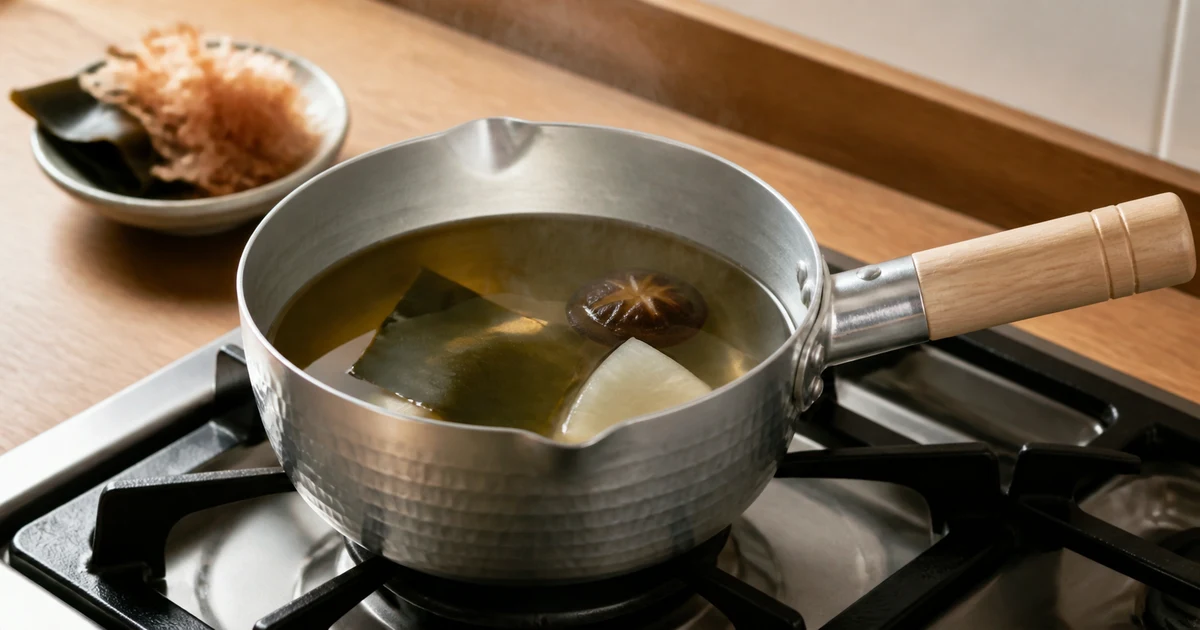
There is a reason a yukihira saucepan rarely stays at the back of a Japanese kitchen cabinet. It is the pan you reach for when you want miso soup before breakfast, need to warm dashi without overshooting the heat, or want one bowl of noodles without lifting a heavy stockpot.
The appeal is not luxury. It is rhythm. A good yukihira is light enough to lift with one hand, responsive enough to notice a small change in flame, and shaped so broth can be poured directly into a bowl. After a few days, these small conveniences begin to remove friction from everyday cooking.
If you are buying your first one, the practical answer is usually simple: choose an 18 cm pan, then let your cooktop decide the material. Traditional aluminum is the lightest and quickest to respond on gas. For induction, choose a model whose exact size is explicitly listed as induction compatible.
Will a Yukihira Earn a Place in Your Kitchen?
You will probably use it often if you regularly make soup, stock, instant or fresh noodles, boiled vegetables, sauces, or small simmered dishes. Its wide opening makes stirring and skimming easy, while the long handle and pouring lip help move hot liquid without another utensil.
It is less convincing if you mainly cook large batches, want a pan for deep-frying, need long heat retention, or prefer cookware that can move from oven to table. For shared hot pot and slow, steady heat, the heat-retaining character of a donabe may suit the job better. A yukihira is the agile preparation pan; a donabe is the slow, comforting cooking vessel.
Why 18 cm Is the Most Useful First Choice
An 18 cm yukihira is large enough for two modest bowls of soup, vegetables, a small nimono, or a serving of noodles with room to stir. It is still compact enough to lift easily, store in a small kitchen, or pack carefully in a suitcase after a trip to Japan.
| Size | Feels best for | Think twice if |
|---|---|---|
| 14–16 cm | Sauces, one serving, reheating a side dish, small amounts of dashi | You boil noodles or need headroom for bubbling liquid |
| 18 cm | The most flexible first pan for soup, vegetables, noodles, and small simmered dishes | You usually cook for four or prepare large batches |
| 20–22 cm | Several portions, larger ingredients, and more cooking surface | Your burner, sink, or storage space is small |
| 24 cm and above | Batch preparation and professional-scale work | You want the light, nimble feeling that defines a home yukihira |
Diameter is only a shortcut. Yoshikawa’s stainless range lists approximately 1.2 liters at 16 cm, 1.6 liters at 18 cm, and 2.1 liters at 20 cm. Shape varies by maker, so compare usable capacity as well as diameter. Also check the full handle length—an 18 cm pan may still be awkward in a shallow cupboard.
What the Pan Feels Like at a Working Stove
In a restaurant kitchen, the useful quality is not simply that the pan heats quickly. It is that the pan responds. When a broth approaches a boil, reducing the flame produces a noticeable change without a long delay. When seasoning needs adjustment, the broad opening gives the cook room to taste, stir, and skim.
That responsiveness is especially valuable with dashi, where aroma and clarity matter, and with small simmered dishes in which the liquid is repeatedly checked. The light body also makes controlled pouring easier. These are modest advantages individually; together, they explain why the pan becomes habitual.
The Professional Relative: Yattoko-Nabe
At our restaurant, we also use yattoko-nabe, handleless pans that perform a role similar to a yukihira. Instead of a fixed handle, the cook grips the rim with plier-like yattoko, or a dedicated pan gripper.
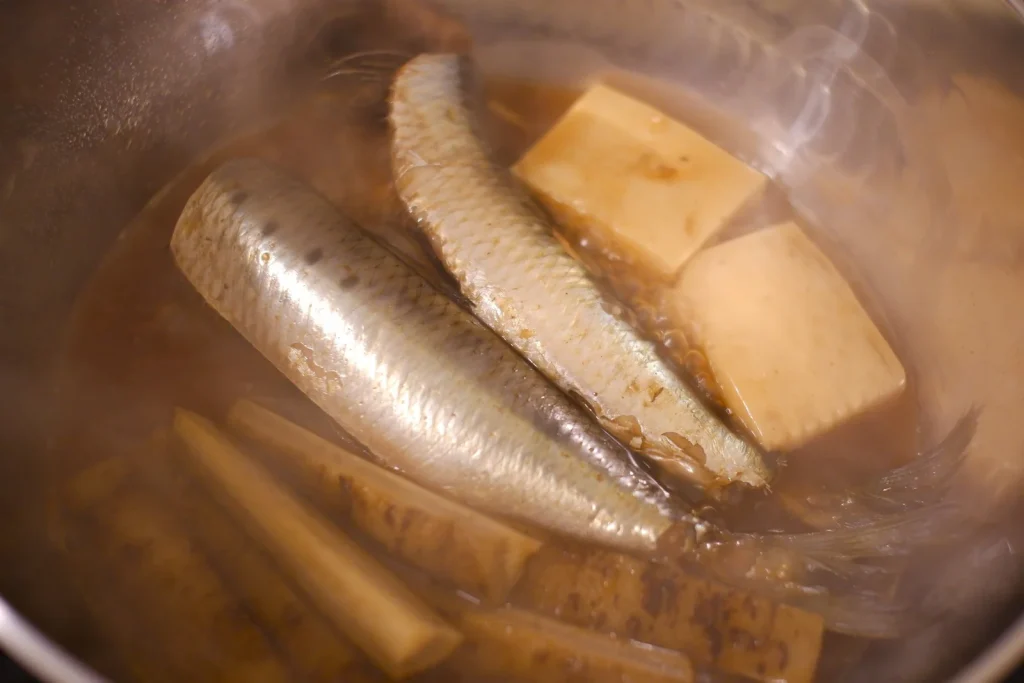
During service, one pan may warm dashi while another simmers fish with soy sauce and mirin. With no wooden handles projecting across the range, several pans fit around limited heat sources. When service ends, different sizes nest into a compact stack.
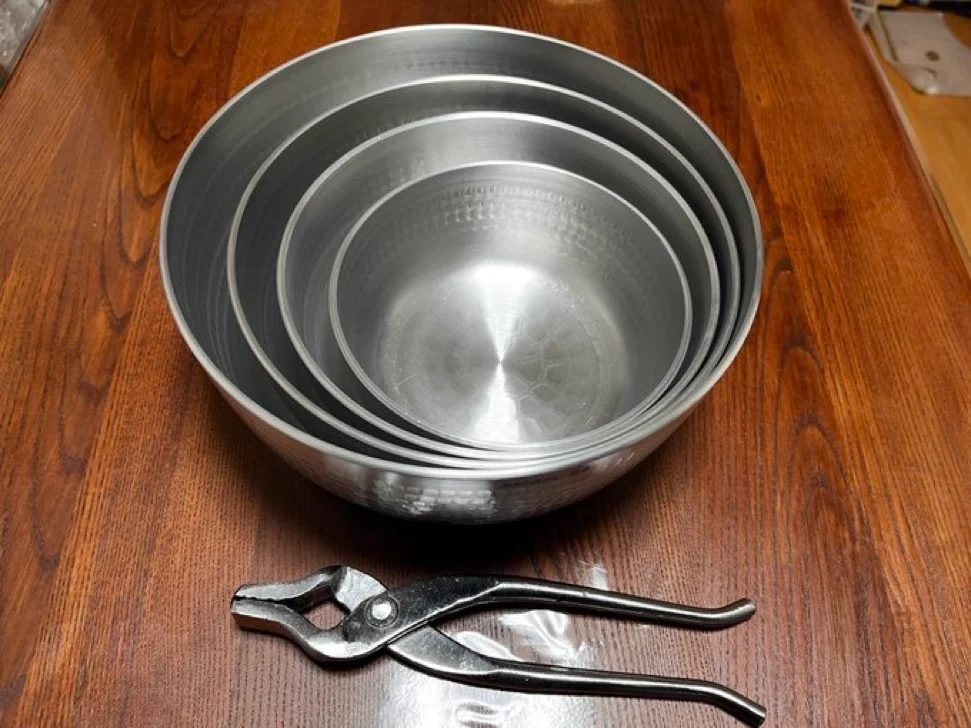
The system is efficient, but it demands confidence. The gripper must match the pan, the rim must be held securely, and an overfilled pan becomes risky to move. For most home cooks, a fixed-handle yukihira offers the same quick-working character with a gentler learning curve. A yattoko setup is for the cook who specifically wants professional nesting and already understands the handling tradeoff.
Choose With Your Cooktop, Not With Nostalgia
Traditional Aluminum: the Lightest, Fastest-Feeling Option
Plain aluminum is the classic choice. It transfers heat readily, is comfortable to lift, and makes the pan feel almost like an extension of the hand. If you cook on gas and value speed and low weight, this is the version that most clearly delivers the traditional yukihira experience.
The tradeoff is care. Uncoated aluminum can discolor, and strongly acidic or alkaline foods can affect the surface. Nakao advises against leaving tomato, vinegar, and other strongly acidic preparations in its aluminum cookware for extended periods. Cook, transfer the food, wash according to the maker’s instructions, and dry promptly.
Plain aluminum usually does not work on induction. Some pans add an induction-compatible base or combine materials, but do not assume compatibility from the word “yukihira.” Check the exact model and diameter.
Stainless Steel: More Weight, More Flexibility
Stainless steel is heavier and does not respond quite like thin aluminum, but it resists corrosion better and is often easier to match with modern cooktops. It is a sensible choice for an overseas kitchen when induction compatibility and durability matter more than minimum weight.
Even here, read the specification for the exact size. Yoshikawa lists most pans in one stainless range as induction compatible but excludes the 14 cm version. A small base may fall below a cooktop’s detection diameter. “Stainless” alone is not an IH guarantee.
Small Details You Appreciate After the First Week
- Hammered walls: the uchidashi pattern gives a relatively light metal body extra stiffness and a distinctly Japanese working-kitchen appearance. Wall thickness still affects stability and response.
- Pouring lips on both sides: useful for right- and left-handed pouring, and for moving broth into a narrow bowl without reaching for a ladle.
- Interior measurements: convenient for soup and stock, but approximate rather than laboratory-precise.
- A broad opening: makes skimming, reducing, tasting, and cleaning easier.
- A separate lid: many yukihira pans are sold without one. Buy a fitted lid only if covered simmering is part of your regular cooking.
Before It Goes in Your Cart
The brand name matters less than getting these details right:
- Cooktop: confirm gas, electric, or induction compatibility for the exact model and size.
- Capacity: choose for your largest regular task and leave safe headroom for boiling liquid.
- Filled weight: a pan that feels light when empty may be uncomfortable when full.
- Handle: inspect how it is attached and whether replacement handles are available. Keep wooden handles away from adjacent flames.
- Storage: measure the pan with the handle, not just the diameter.
- Care: do not assume dishwasher, oven, or deep-frying suitability. Follow the exact product instructions and avoid empty high-heat preheating.
If you are bringing one home from Japan, keep the box or photograph the care label before packing. The most important words to verify are the material, usable capacity, compatible heat source, and whether a lid is included.
Two Sensible Starting Points
For a compatible gas stove, an 18 cm aluminum yukihira gives you the lightness and quick response that make this pan special. For induction—or when easier care matters more than minimum weight—start with an explicitly induction-compatible model.
Do not buy one merely because it looks Japanese. Buy it if you can already picture the repeated job: tomorrow’s miso soup, a quick bowl of noodles, vegetables blanched before dinner, or dashi poured cleanly without a heavy pot. That is when a yukihira stops being a souvenir and becomes the pan you reach for every day.
Disclosure: As an Amazon Associate, Japan Food Compass earns from qualifying purchases.
- For gas cooking and the classic lightweight feel: compare 18 cm aluminum yukihira saucepans on Amazon.
- For an induction kitchen: compare induction-compatible yukihira saucepans on Amazon.
For a broader first-tool shortlist, see our guide to Japanese kitchen tools worth buying.
Editorial Sources
- Nakao Aluminum: Yukihira saucepan materials, sizes, and construction
- Nakao Aluminum: Handleless yattoko pans and pan grippers
- Nakao Aluminum: How to choose cookware by shape, material, and heat source
- Nakao Aluminum: Material-specific use and care guidance
- Yoshikawa: Stainless yukihira sizes, capacities, materials, and induction compatibility
- Yoshikawa: Stainless steel yukihira instruction manual