A bottle of sake can taste polished at a restaurant and strangely flat at home. Storage and serving temperature matter, but one detail is often overlooked: the vessel touching your hand and lips.
At a sushi counter, a sake cup is not merely decoration. Its material affects how quickly it feels cold or warm. Its rim changes the way the liquid reaches the mouth. Its opening can alter how easily aromas reach the nose. Its weight and texture also shape the drinker’s expectations before the first sip.
That does not mean an expensive cup can repair poorly stored sake or transform an ordinary bottle into a masterpiece. It means the right vessel can present a sake more clearly, while the wrong one can distract from qualities that were already there.
Disclosure: As an Amazon Associate, Japan Food Compass earns from qualifying purchases.
The Night a Thick Glass Flattened a Beautiful Sake
Early in my career, after I had begun serving guests at the counter, a regular ordered one of our best bottles of junmai daiginjo for a special evening. Wanting to serve a generous pour, I reached for a sturdy, thick-walled glass from the kitchen.
The sake was excellent, but the reaction was not. The guest described it as heavy and less special than expected. I poured the same sake into a thinner glass and compared them myself.
The thick rim announced itself before the sake did. It felt blunt against the lips and delivered a broad rush of liquid toward the center of the tongue. The thinner rim felt less intrusive, and the sake seemed to spread more cleanly across the mouth. The aromatic impression also felt lighter and more immediate.
The chemistry of the sake had not changed. The drinking experience had. That evening taught me to treat the vessel as the last serving tool in the process—not as an automatic upgrade, but as something that should support the drink rather than compete with it.
What a Sake Vessel Can—and Cannot—Change
Four characteristics matter more than price alone.
- Temperature response: A conductive single-wall metal cup feels cold or hot quickly. An insulated double-wall vessel slows temperature change.
- Rim and flow: Rim thickness, diameter, and curvature affect the tactile impression and how much sake enters the mouth at once.
- Aroma space: Bowl volume and the width of the opening influence how aromas collect and reach the nose. The decorative material alone does not determine aroma performance.
- Weight and texture: A heavy, cool cup and a light, smooth cup create different expectations, even when they contain the same sake.
Research on beverages supports the broader point that vessel shape, rim material, and tactile properties can influence perceived aroma, taste, and temperature. The evidence is not a promise that one vessel always tastes “better,” and results from wine, tea, or juice should not be treated as a sake-specific law. The practical lesson is simpler: compare vessels with the same sake before assuming the bottle is the problem.
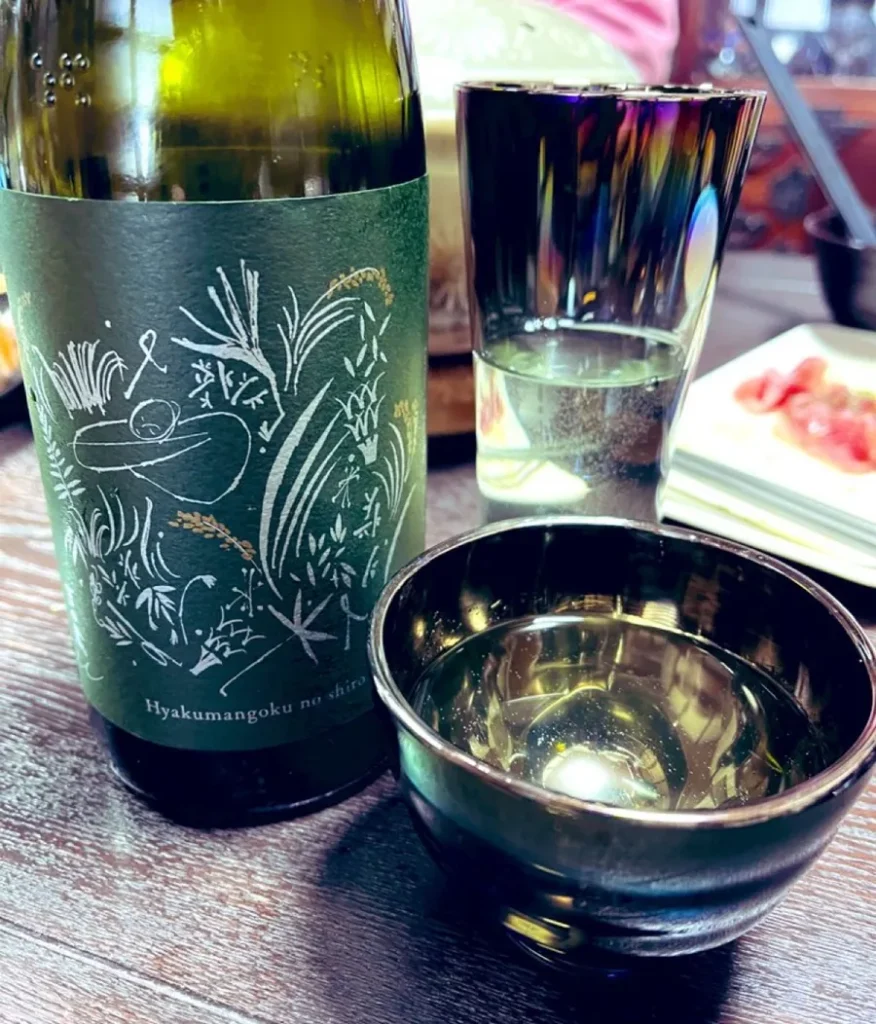
1. Tin: Fast Temperature Response and a Substantial Feel
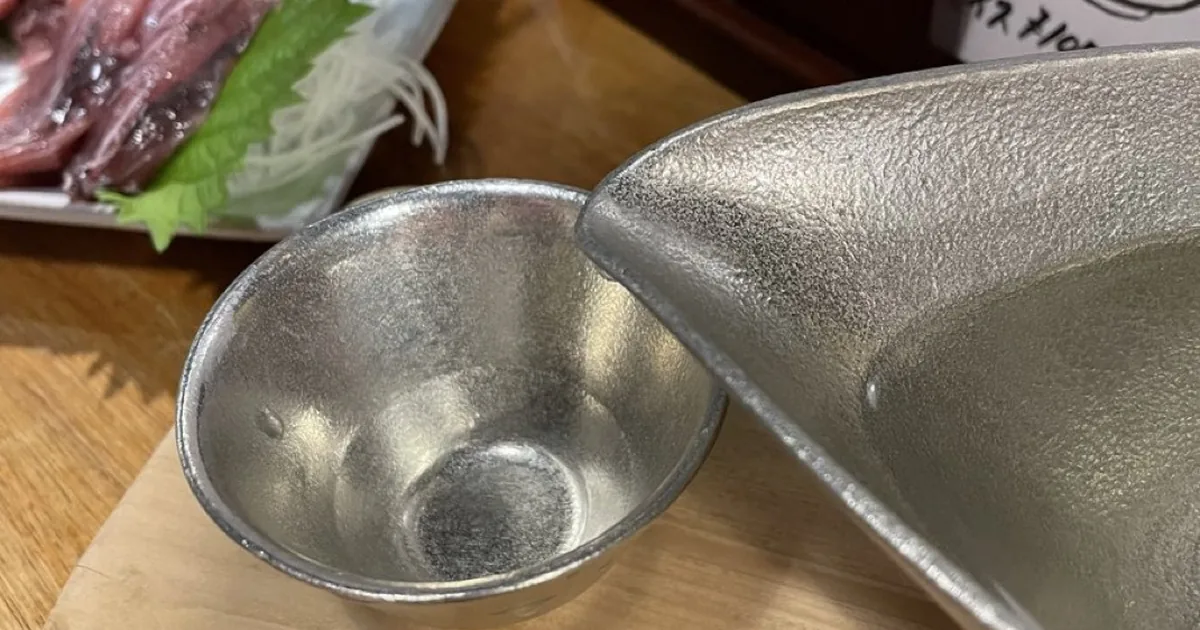
Pure tin sakeware has a distinctive presence. It is weighty for its size, cool to the touch, and usually has a softly textured cast surface. Because tin conducts heat efficiently, the cup itself quickly takes on the temperature of the drink. Pour chilled sake and the vessel soon feels cold in the hand; pour warm sake and the surface also becomes warm quickly.
In Japan, tin has long been said to make sake seem rounder or mellower. Even NOUSAKU’s own guidance presents this as a traditional observation rather than claiming that a cup scientifically removes acids or impurities. The perceived difference may also involve temperature, weight, surface texture, and expectation.
Best for: chilled dry junmai, honjozo, or other sake you want to serve with a crisp physical sensation. I especially like the contrast between a cool tin cup and salty or vinegared appetizers.
Think twice if: you want a lightweight cup, use a dishwasher, or prefer a vessel that keeps its original finish without small marks. Pure tin is soft and can scratch or deform. NOUSAKU advises hand-washing with a soft sponge and warns against the microwave, dishwasher, freezer, direct heat, and long refrigeration.
View the NOUSAKU pure-tin guinomi on Amazon
2. Titanium: A Light Double-Wall Option for Slow Sipping
Titanium offers a very different experience. It is light, corrosion-resistant, and useful when durability matters. A double-wall titanium tumbler can slow heat transfer and make condensation less likely than an ordinary single-wall glass.
Be careful with the word “vacuum.” Not every double-wall titanium cup is vacuum-insulated. The HORIE tumbler featured here is described as a double-layer vessel with an air space, so it should be introduced as double-wall rather than automatically called a vacuum flask. HORIE describes its products as high-retention vessels that reduce condensation and limit heat transfer to the hand.
Best for: someone who pours one serving and drinks slowly, wants a light but durable vessel, or uses the same cup indoors and outdoors. It is also practical when a wet ring on the table is particularly annoying.
Think twice if: aroma is your highest priority. A wide straight-sided tumbler does not necessarily concentrate a delicate ginjo aroma as effectively as a smaller tulip-shaped glass. The 350 ml HORIE tumbler is also much larger than a traditional ochoko, so use a measured pour rather than filling it like a water glass.
View the HORIE double-wall titanium tumbler on Amazon
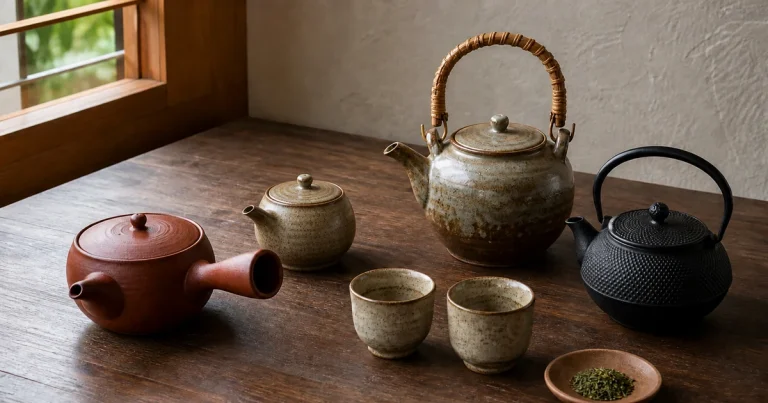
3. Tokkuri and Ochoko: Warm Sake, Small Pours, and a Slower Pace
A tokkuri and ochoko set changes more than temperature. The narrow-necked flask encourages smaller pours, and the cup empties in a few sips. That rhythm makes it easy to notice how sake evolves as it cools from warm to lukewarm.
Ceramic and porcelain should not be treated as identical. A thick earthenware vessel generally feels softer and more rustic, while porcelain is often thinner, smoother, and less porous. Shape and wall thickness vary considerably, so material labels alone do not predict exactly how long a sake will stay warm.
Best for: junmai, kimoto, yamahai, and other savory styles that remain interesting as their temperature changes. Warm sake can also make rich bites feel less heavy. Try it beside fatty tuna or glazed anago sushi, then compare it with the same sake at room temperature.
Think twice if: you want to smell a highly aromatic ginjo before every sip. A tiny ochoko provides little headspace. Also, never assume that every decorated tokkuri is microwave-safe. Follow the maker’s instructions; when uncertain, warm the filled tokkuri gently in a hot-water bath and avoid sudden temperature shocks.
View the made-in-Japan porcelain tokkuri and ochoko set on Amazon
4. Kiriko Cut Glass: Light, Color, and Tactile Craft
Kiriko is frequently described as though its main advantage were an extremely thin rim. That is misleading. Many cut-glass sake cups are deliberately substantial because the maker cuts patterns through a colored outer layer to reveal the clear glass beneath. Their appeal comes from reflected light, color contrast, weight, and the texture of the cut pattern in the hand.
The cuts themselves do not aerate sake. Aroma performance depends more on the bowl and opening. If you want to emphasize fruity ginjo aromas, look for a vessel with enough bowl volume to leave headspace and an opening that turns slightly inward. If the occasion and visual ritual matter most, a traditional rounded guinomi can be deeply satisfying even if it is not an aroma-focused tasting glass.
Authenticity deserves attention. The Edo Kiriko Cooperative Association notes that Edo Kiriko is a registered trademark and warns buyers about imitations. A traditional craft label or clear maker information is more meaningful than a product title that merely says “Japanese-style cut glass.”
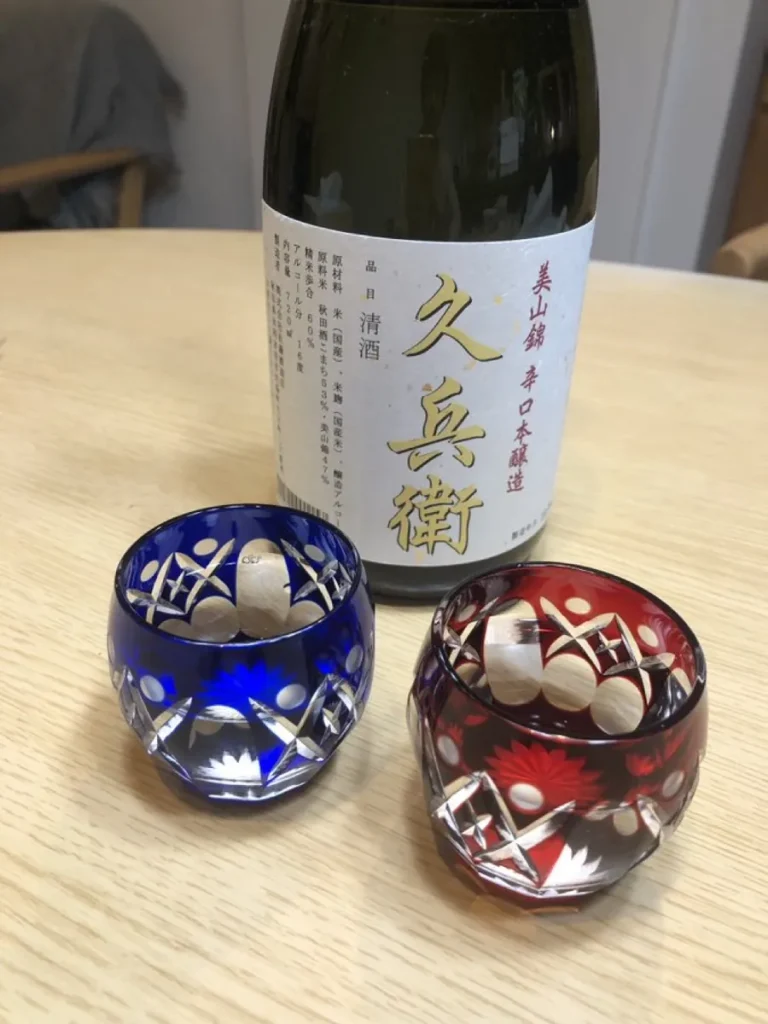
Best for: celebratory pours, gifts, and drinkers who value the visual and tactile experience as much as pure aroma concentration.
Think twice if: you need dishwasher-safe everyday glassware. The Edo Kiriko Cooperative Association recommends careful hand-washing and warns against dishwashers, microwave ovens, direct heat, and sudden temperature changes.
View the Tajima Glass Edo Kiriko guinomi pair on Amazon
Choose by the Way You Actually Drink
- You usually drink chilled, dry sake: start with one tin guinomi if you enjoy a cool, weighty cup and do not mind hand-washing.
- You sip slowly or drink outdoors: choose a double-wall titanium vessel, but check whether the product is air-insulated or vacuum-insulated and confirm its capacity.
- You enjoy warm sake with dinner: buy a modest porcelain or ceramic tokkuri set before investing in decorative pieces. Confirm the heating instructions first.
- You want a memorable gift: choose cut glass with a named maker, documented origin, and a shape suited to the recipient’s preferred sake.
For a first purchase, do not begin with the most expensive vessel. Begin with the sake you drink most often. A beautiful daiginjo glass is a poor investment if your favorite evening drink is warm junmai, just as a tiny ochoko may frustrate someone who wants to explore aroma.
A Five-Minute Test Before Buying a Full Set
You can test the principle at home without specialist equipment.
- Pour the same sake at the same temperature into two clean vessels.
- Use equal amounts and avoid strongly scented detergent residue.
- Compare the first contact at the lip, the direction of the pour, aroma before and after sipping, and how quickly each serving warms.
- Repeat after ten minutes. The vessel you prefer at the first sip may not be the one you prefer later.
This small comparison is more useful than memorizing a rule that says one material is universally superior. It also complements the pairing approach in our guide to choosing sake for sushi: first match the sake to the food, then select a vessel that supports the temperature and aroma you want.
Let the Vessel Support the Sake
The best sake vessel is not always the rarest or most expensive. It is the one that makes the serving temperature easier to manage, feels natural at the lips, and suits the pace of the meal. In an omakase course, that choice may change during the evening. At home, owning two contrasting vessels is often more useful than buying a matching cabinet full of cups.
Start with one bottle you know well. Pour it into two different vessels and pay attention to the first second: the weight in your hand, the rim at your lips, the temperature, and the aroma that follows. The sake has not become a different drink, but you may finally notice why the last few millimeters between bottle and palate matter.
If this guide helped you choose sakeware with more confidence, you can support Japan Food Compass on Ko-fi and help us continue sharing carefully researched guides and original kitchen stories.
 Support me on Ko-fi