An izakaya is a casual Japanese dining pub where people order drinks and a succession of small dishes to share. It is closer to a gastropub or tapas bar than to a bar that serves only snacks, but no English comparison is exact. Food is a central part of the experience, and many guests visit for dinner as well as drinks.
Izakaya range from large chains with digital menus to tiny neighborhood establishments with a short handwritten list. The atmosphere, prices, house rules, and specialties vary, but the basic rhythm is relaxed: choose a drink, order a few dishes, add more as the meal continues, and enjoy the table at an unhurried pace.
The Meal Is Built One Small Order at a Time
| Feature | What to expect |
|---|---|
| Style | Casual Japanese pub dining |
| Food | Small plates, grilled dishes, fried food, sashimi, and regional specialties |
| Drinks | Beer, sake, shochu, highballs, cocktails, and soft drinks |
| Ordering | Several rounds rather than one complete order |
| Important detail | An automatic appetizer may function as a table charge |
What Does Izakaya Mean?
The word izakaya is written 居酒屋. It originally conveys the idea of staying or sitting at a sake shop to drink instead of buying alcohol only to take away. The modern izakaya has developed into a broad category of informal eating and drinking establishments.
Calling an izakaya a “Japanese bar” is convenient but incomplete. A conventional bar may center on drinks, while an izakaya usually gives food equal importance. It is common to eat a full meal by combining several small orders.
What Food Is Served at an Izakaya?
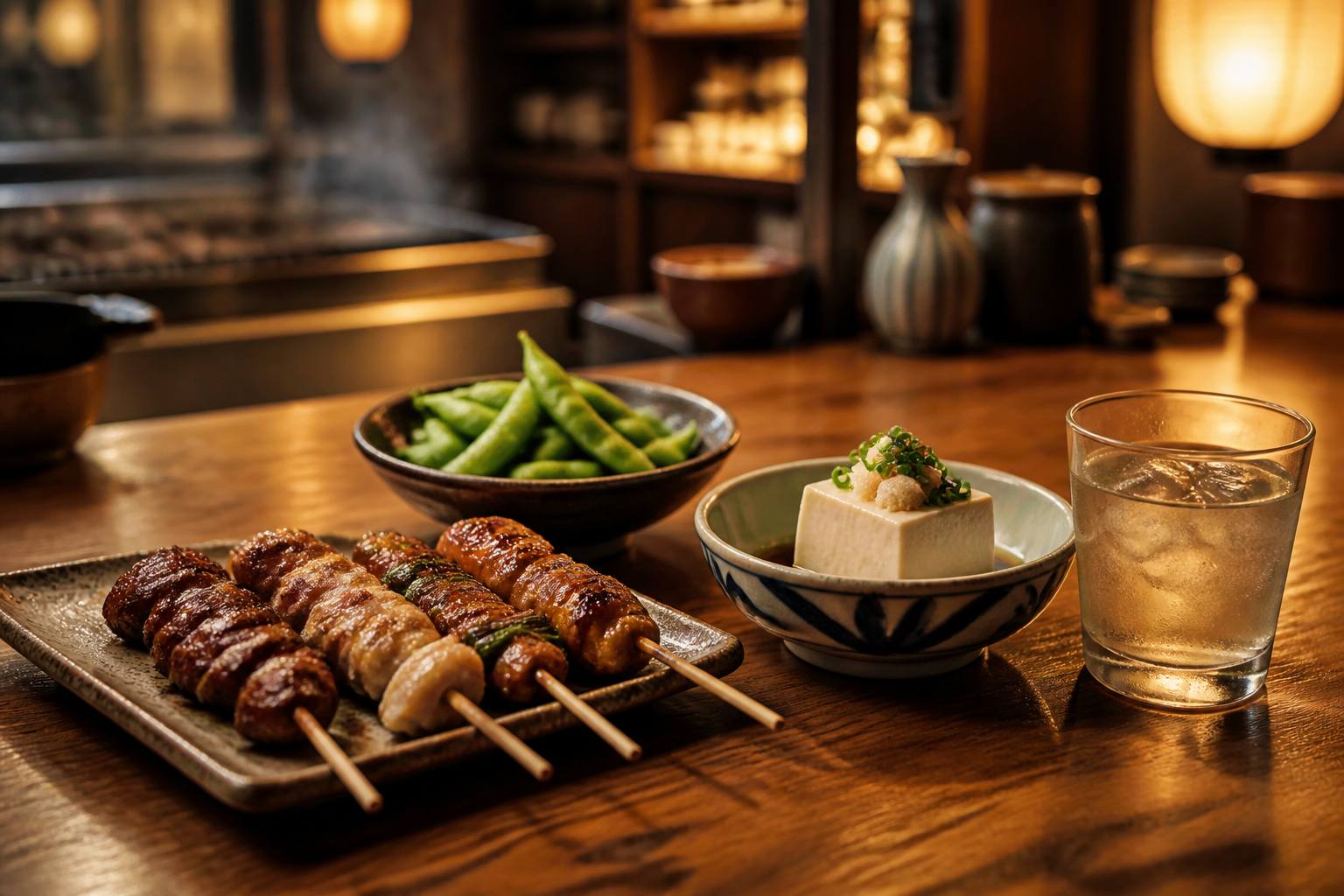
There is no single izakaya menu. One establishment may specialize in seafood, another in chicken, regional cooking, vegetables, sake pairings, or inexpensive comfort food. Common choices include edamame, chilled tofu, salads, pickles, sashimi, karaage fried chicken, grilled fish, dumplings, noodles, and rice dishes.
Grilled skewers are particularly familiar. If chicken skewers are the specialty, our guide to what yakitori is explains the main idea without treating every grilled skewer as chicken. A menu may also offer tsukune chicken meatballs alongside vegetables, pork, or other kushiyaki.
Most groups begin with quick dishes and then add richer or slower-cooked items. A final bowl of rice, noodles, or ochazuke may serve as shime, the closing food of the meal. You do not need to follow a fixed sequence, and you are not expected to order everything at once.
What Do People Drink?
Beer is common, but it is only one option. Depending on the establishment, the menu may include sake, shochu, whisky highballs, fruit-flavored chuhai, umeshu plum liqueur, wine, cocktails, tea, and other nonalcoholic drinks.
You do not have to drink alcohol to eat izakaya food. Soft drinks are widely available, although each establishment sets its own ordering policies. If a menu mentions a minimum drink or order requirement, follow the posted rule or ask the staff.
What Is Otoshi?
After you sit down, a small dish may arrive before you order any food. This is called otoshi in much of Japan and tsukidashi in some regions. It might be pickled vegetables, simmered food, tofu, seafood, or another small seasonal item.
The important point is that otoshi is generally not a complimentary appetizer. Its price functions as a seating or table charge and is added to the bill. Practices and prices vary, so check the menu or ask the staff if the charge is unclear. Treating the dish as a mistake and sending it back without asking may not remove the charge.
People with food allergies should ask about otoshi before eating it because it can arrive automatically. The ingredients may not be obvious from appearance alone.
How Ordering Usually Works
At many izakaya, staff first ask for drinks. You can then choose two or three dishes for the table and add more later. Ordering gradually helps keep hot food fresh and prevents a small table from becoming crowded.
The ordering method may be a server, call button, tablet, QR code, or handwritten order slip. Menus in tourist areas and major chains often include photographs or English, while small independent establishments may have Japanese-only menus.
Useful phrases include:
- Sumimasen: “Excuse me,” used to call a server.
- Kore o kudasai: “This, please,” while pointing to an item.
- Osusume wa nan desu ka? “What do you recommend?”
- Okaikei onegaishimasu: “The bill, please.”
If yakitori is a major part of the menu, see our guide to ordering yakitori in Japan for seasoning choices, skewer quantities, and menu terms.
How Shared Plates Work
Izakaya dishes are commonly placed in the middle of the table. Each guest may receive a small plate called a torizara. Move a portion from the shared dish to your own plate before eating instead of repeatedly eating directly from the communal platter.
There is no need to divide every dish with mathematical precision. Be aware of the group, ask before taking the last piece, and coordinate new orders so that everyone has something they can eat.
Izakaya Etiquette for Beginners
Izakaya are lively and informal, so beginners do not need to memorize an elaborate ritual. A few practical habits are enough:
- Wait until everyone has a drink before the first toast when dining with a group.
- Use your small plate for food from shared dishes.
- Do not stick chopsticks upright in rice or pass food directly between two pairs of chopsticks.
- Order in stages instead of filling the table immediately.
- Ask before photographing staff, other guests, or a small restaurant’s cooking area.
- Do not leave a tip; tipping is not customary in Japan.
Some establishments require shoes to be removed before entering a tatami or sunken seating area. Follow the staff’s direction and keep socks on in these spaces.
Dietary Restrictions and Allergies
Photo menus help identify dishes but do not confirm every ingredient. Sauces, broths, dressings, and marinades may contain soy, wheat, fish-based dashi, sesame, egg, or other allergens. Shared grills, fryers, utensils, and preparation areas also create cross-contact risks.
Tell the restaurant about serious allergies before ordering and mention them before accepting otoshi. Not every restaurant provides complete allergy information, and a small kitchen may be unable to guarantee avoidance. The Consumer Affairs Agency offers an English food-allergy communication sheet that travelers can prepare in advance.
Ordering, Seating, and Paying at an Izakaya
Is an Izakaya the Same as a Bar?
Not exactly. Drinks matter, but an izakaya normally serves a substantial range of food intended for sharing. “Japanese dining pub” or “gastropub” is usually a closer description.
Can You Visit an Izakaya Without Drinking Alcohol?
Generally, yes. Most offer tea and other soft drinks. Individual establishments may have minimum-order policies, so check the menu when in doubt.
Do You Need a Reservation?
Not always. Walk-ins are common, especially at chains, but popular or very small izakaya can fill quickly in the evening. Reservations are useful for groups and busy Friday or weekend nights.
Is Otoshi Optional?
Usually it functions as an automatic table charge rather than an optional menu order. Policies vary by establishment. Ask before being seated if you do not understand the charge or have dietary restrictions.
Are All Izakaya Menus Based on Yakitori?
No. Yakitori is common, but izakaya can specialize in seafood, regional dishes, sake, vegetables, fried food, or many other styles. Our comparison of yakitori and kushiyaki can help decode skewer sections on mixed menus.
How to Enjoy an Izakaya Without Overordering
An izakaya is a relaxed Japanese dining pub built around drinks and shared small plates. Order a few dishes at a time, transfer shared food to your own plate, and expect that an automatic otoshi appetizer may represent a table charge. Menus and house rules differ widely, so asking a simple question is better than assuming every izakaya works the same way. With those basics understood, an izakaya is one of the most approachable places to explore Japanese everyday food culture.