The best Japanese kitchen tools for beginners are practical items that make everyday cooking easier—not specialty gadgets that spend most of their time in a drawer.
I am involved in sushi restaurant operations in Japan, where useful equipment earns its place by improving consistency, saving time, or making an important technique easier. A home kitchen is different, but the same rule applies: buy tools that match what you cook regularly.
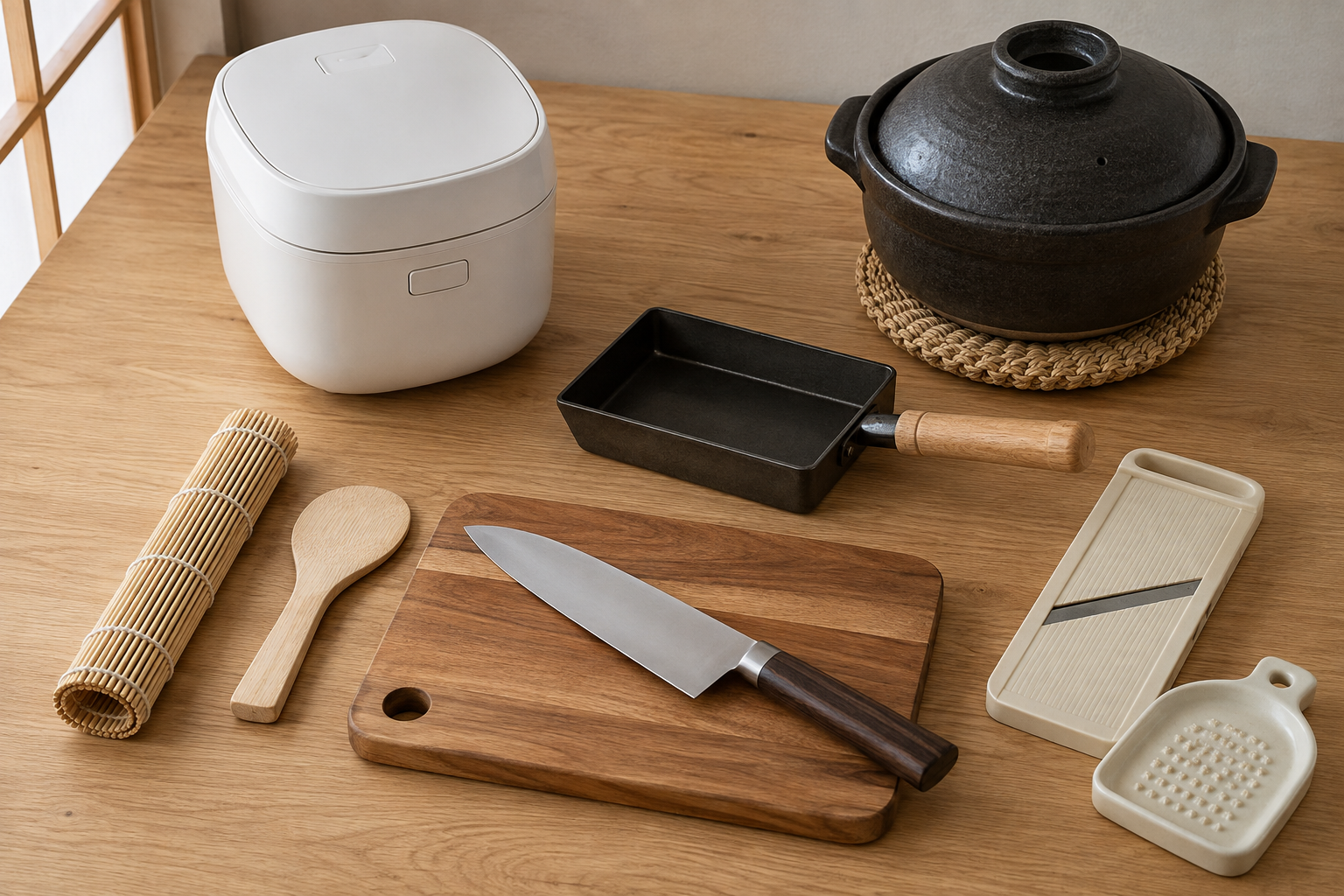
For most beginners, a dependable rice cooker and one versatile knife offer the greatest value. The other tools in this guide are worth adding only when they suit your cooking habits.
Japanese Kitchen Tools for Beginners: Quick Comparison
| Tool | Best for | Buy it if… | Priority |
|---|---|---|---|
| Zojirushi rice cooker | Consistent Japanese rice | You eat rice several times a week | High |
| TOJIRO CLASSIC gyuto | Everyday cutting and prep | You need one versatile knife | High |
| Benriner mandoline | Thin vegetable slices | You make salads, pickles, or garnishes | Medium |
| Ceramic grater | Ginger, daikon, and garlic | You cook Japanese food regularly | Medium |
| Tamagoyaki pan | Japanese rolled omelets | You plan to make them often | Medium |
| Donabe | Hot pot and shared meals | You enjoy table cooking | Medium |
| Sushi mat and rice paddle | Homemade maki sushi | Sushi making is a main goal | Low to medium |
1. Zojirushi Micom Rice Cooker: Best Long-Term Investment
Rice texture and moisture affect everything from donburi to sushi. A reliable rice cooker gives you repeatable results while freeing you to prepare the rest of the meal.
The Zojirushi NS-TSC10 Micom Rice Cooker & Warmer is a practical home model. It cooks up to 5.5 cups, uses computerized fuzzy-logic control, and includes a steaming basket. It is useful for short-grain rice, sushi rice, onigiri, and weekly meal preparation.
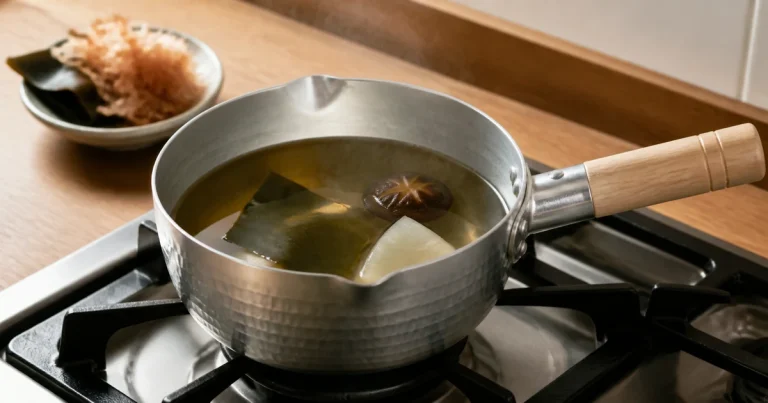
A rice cooker will not season sushi rice for you, but it provides a consistent starting point. It is worth considering if you eat rice several times a week or find stovetop results unreliable. If you cook rice only once or twice a month, a stovetop pan may be enough. For a different everyday tool, our yukihira saucepan guide explains Japan’s lightweight, responsive aluminum pans.
Recommended example: Zojirushi NS-TSC10 product details
2. TOJIRO CLASSIC Gyuto: Best First Japanese Knife
A long, single-bevel yanagiba may look like the obvious Japanese knife, but it is too specialized for most beginners. A gyuto is closer to a Western chef’s knife and can handle vegetables, boneless meat, fish portions, herbs, and everyday preparation.
The TOJIRO CLASSIC F-808 Chef Knife has a 210 mm double-bevel blade with a VG10 core and stainless outer layers. Its double bevel is easier for most beginners to use, while the stainless construction requires less care than reactive carbon steel.
Choose it if you want one versatile knife and have enough cutting-board space. An 180 mm gyuto or 165–170 mm santoku may feel more comfortable if you prefer a shorter blade. Never use a thin gyuto on bones or frozen food, and always wash and dry it by hand.
Recommended example: TOJIRO CLASSIC F-808 specifications
3. Benriner Mandoline: Best for Thin, Even Slices
Thin, uniform vegetable slices improve texture, marination, and presentation. An adjustable Benriner mandoline makes quick work of cucumber for sunomono, daikon for salads, cabbage for tonkatsu, and vegetables for quick pickles.
It is useful if you prepare vegetables frequently or have not yet developed confident knife skills. The blade is extremely sharp, so always use the hand guard or a cut-resistant glove and stop before the ingredient becomes too small to hold safely.
Manufacturer information: Benriner official website
4. Japanese Ceramic Grater: Best Affordable Addition
A Japanese ceramic grater turns ginger, daikon, garlic, apple, or onion into a fine, juicy paste. Many models also have a shallow channel that catches the liquid, which is useful in dressings and sauces.
Choose a stable model with a non-slip base. A small plate is enough for ginger and garlic; a wider one is better for daikon. If you already own a fine Microplane-style grater and rarely make daikon oroshi, you may not need another tool.
5. Tamagoyaki Pan: Best for Rolled Omelet Fans
The straight sides of a rectangular pan help form the even layers and neat shape of tamagoyaki. For beginners, a coated model is usually easier to control and clean than traditional copper or uncoated iron.
Buy one if rolled omelets will become a regular breakfast, bento, or sushi item. If you are only curious, practice first in a small round frying pan. Check cooktop compatibility—especially for induction—and avoid an oversized model, which makes thin egg layers harder to control.
6. Donabe: Best for Hot Pot and Shared Meals
A donabe is a Japanese earthenware pot used for hot pot, soups, steaming, braising, and sometimes rice. It retains heat well and can go directly from the stove to the table, making it especially enjoyable for shared meals.
Donabe requires more care than stainless steel. Depending on the model, it may need seasoning before use, thorough drying, and protection from sudden temperature changes. Some are not compatible with induction cooktops.
It is a worthwhile purchase if you often cook for two or more people and enjoy hot pot. For quick single servings, a standard saucepan is more versatile.
7. Bamboo Sushi Mat and Rice Paddle: Best Sushi Starter Tools
Beginners do not need a large sushi kit filled with plastic molds. Start with a bamboo rolling mat, or makisu, for maki rolls and a broad rice paddle, or shamoji, for handling rice without crushing it.
A wooden hangiri can help cool larger batches of sushi rice, but a wide non-metallic bowl is enough when you are starting. Cover the mat with reusable food-safe wrap for inside-out rolls and let it dry completely before storing it.
These inexpensive tools are worth buying if homemade sushi is one of your main goals. Otherwise, spend the money on a tool you will use more often.
If sushi making is your priority, our guide to what sushi is and its main varieties explains the difference between nigiri, maki, and other common styles.
Compare the Seven Tools
These links open current Amazon search results so you can compare dimensions, voltage, materials, and care instructions rather than relying on one fixed listing.
Disclosure: As an Amazon Associate, Japan Food Compass earns from qualifying purchases.
- Rice cooker: compare 120-volt Zojirushi Micom rice cookers on Amazon.
- Gyuto: compare TOJIRO CLASSIC gyuto knives on Amazon.
- Mandoline: compare Benriner Japanese mandolines on Amazon.
- Ceramic grater: compare Japanese ceramic graters on Amazon.
- Tamagoyaki pan: compare tamagoyaki pans on Amazon.
- Donabe: compare Japanese donabe clay pots on Amazon.
- Sushi starter tools: compare bamboo sushi mats and rice paddles on Amazon.
What Beginners Should Not Buy Yet
- An expensive yanagiba: A traditional single-bevel sashimi knife needs specialized technique, maintenance, and sharpening.
- A large wooden hangiri: It is helpful for larger batches of sushi rice but bulky for occasional home use.
- A gadget-filled sushi kit: Extra molds rarely improve sushi. Good rice, nori, vinegar, and reliable ingredients matter more.
Which Japanese Kitchen Tools for Beginners Should You Buy First?
| Your cooking style | Best first three tools |
|---|---|
| Rice-based everyday meals | Rice cooker, gyuto or santoku, ceramic grater |
| Homemade sushi | Rice cooker, gyuto or santoku, sushi mat and rice paddle |
| Vegetable-heavy meals | Gyuto or santoku, mandoline, ceramic grater |
| Hot pot and shared meals | Donabe, gyuto or santoku, mandoline |
Do not buy all seven at once. Start with the tools that solve a real problem in your kitchen, then add specialized equipment when your cooking habits justify it.
Questions That Matter Before Buying Japanese Kitchen Tools
Do Japanese tools make Japanese food more authentic?
Not automatically. Technique, ingredients, seasoning, and repetition matter more than the country printed on the packaging. A Japanese tool is worth buying when its design makes a task easier or more consistent.
Should my first Japanese knife be a gyuto or santoku?
Choose a gyuto if you like a longer blade and have enough workspace. Choose a santoku if you prefer a shorter, lighter knife for vegetables, boneless meat, and daily home cooking. Both are more versatile for beginners than a yanagiba or deba.
Is a rice cooker better than cooking rice in a pot?
A pot can produce excellent rice. A rice cooker’s advantage is convenience and consistency, especially when rice is part of several meals each week.
Build a Small Kit Around the Food You Actually Cook
Among these Japanese kitchen tools for beginners, the smartest first purchases are a reliable rice cooker—if rice is a regular part of the diet—and one versatile gyuto or santoku. The third tool should match what you actually cook: a ceramic grater, mandoline, sushi mat, tamagoyaki pan, or donabe.
The goal is not to own the most Japanese-looking kitchen. It is to choose a few tools that save time, improve consistency, and get used often.
If this guide helped you better understand or choose Japanese cookware, you can support Japan Food Compass on Ko-fi and help us continue sharing carefully researched guides and original kitchen stories.