When people say “Japanese food,” they often picture sushi or ramen first. Both are important, but Japanese food is much wider than a list of famous dishes. One useful word for understanding that wider picture is washoku.
Washoku generally refers to traditional Japanese food and the food culture around it. It is not one fixed menu. Instead, it describes a way of building meals around seasonality, balance, local ingredients, and care for presentation.
The basic idea of a washoku meal
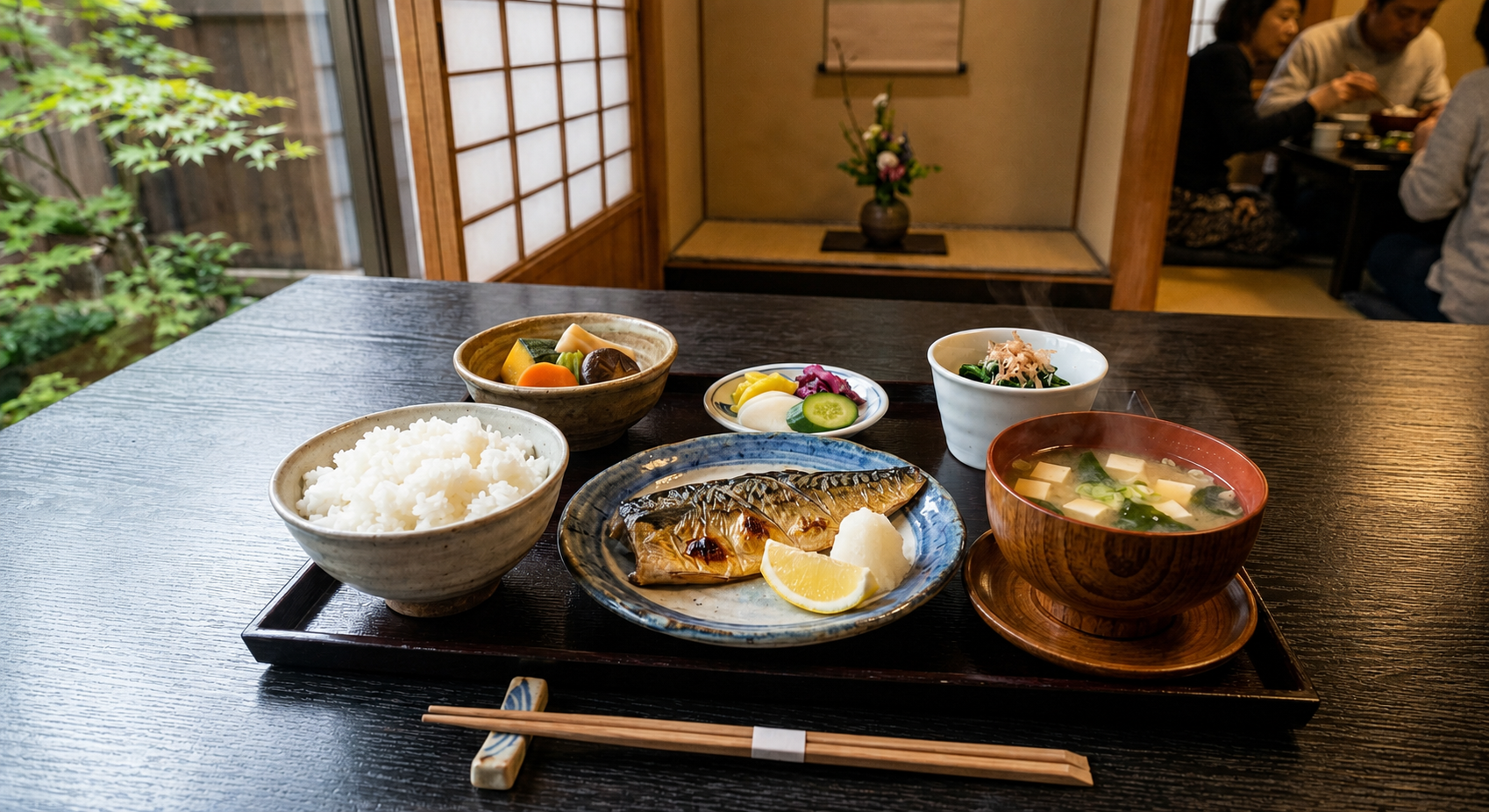
A classic starting point is ichiju-sansai: one soup and three side dishes, served with rice and pickles. In practice, a meal may be simpler or more elaborate. The point is balance rather than strict rules.
A typical set might include:
- Steamed rice
- Miso soup
- One main dish, such as grilled fish or tofu
- Two small vegetable or simmered side dishes
- Pickles for contrast
The result is a meal with different temperatures, textures, colors, and flavors. Salty, sweet, sour, bitter, and savory elements are often present without any single one overwhelming the rest.
Seasonality matters
Japanese menus often change with the seasons. Spring may bring bamboo shoots and cherry-blossom-themed sweets. Summer favors chilled noodles and lighter flavors. Autumn is associated with mushrooms, chestnuts, and new rice, while winter cooking turns toward hot pots and warming broths.
This does not mean every restaurant follows a formal seasonal menu. It does mean that noticing seasonal ingredients is one of the easiest ways to experience Japanese food more deeply.
Washoku is not only restaurant food
You can encounter washoku in a family breakfast, a neighborhood set-meal restaurant, a bento box, or a multi-course kaiseki dinner. The price and level of formality may change, but the underlying attention to balance and season is often still there.
How to start exploring
If you are new to Japanese food, begin with a set meal rather than ordering one large dish. Look for a restaurant serving teishoku, which usually includes rice, soup, a main item, and small sides. It is one of the clearest and most satisfying introductions to everyday Japanese food.
Washoku is best approached with curiosity. Notice the bowl shapes, the small side dishes, and the way a simple ingredient is prepared. Those details are part of the meal.